Both Workers and Factory Owners Seek Resolution Amid India-Awami League Conspiracy in Garment Industry Unrest
The garment sector supplies most of the country’s export earnings. Government policy support, big investment by owners and hard work by workers made Bangladeshi products a global brand. The sector’s growth also created many backward linkage factories. Step by step, the sector built a strong position in many world markets.
But Ms. Sheikh Hasina, who fled to Delhi and got a death sentence, is trying to create unrest in the garment sector. Her return to Bangladesh in December is the subject of rumors. The report says secret Awami League, Jubo League and Chhatra League thugs run destructive acts in the name of workers. The government formed a wage board quickly, which stopped destructive acts on the streets. Still, in some garments, workers sign the attendance book and walk out. To stop production, 204 factories have given holidays.
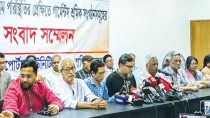
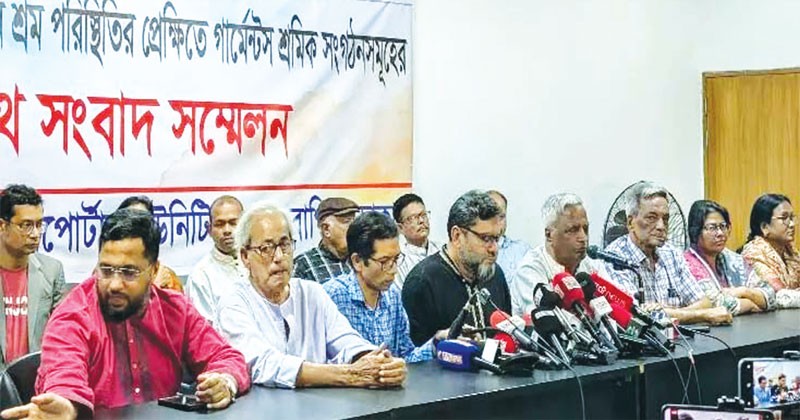
Both garment owners and workers want to solve the crisis through talks. On 12 November, the owners’ group BGMEA held a press conference and asked for two days. It favors a solution through talks. Yesterday, garment worker groups held a joint press conference. They demanded a solution through talks. Both sides want to end the crisis.
Ms. Nazneen Ahmed, Executive Director of the Centre for Policy Dialogue (CPD), hopes for a quick solution. She spoke at an event yesterday. She said the unrest could have been avoided if the wage board had formed earlier. She said owners, workers and the government should now sit together. They should set the pay structure through talks to avoid more unrest.
The report says that India, which pushes Hindutva, and the banned Awami League keep up their plot, even though owners and workers want a solution. It claims they keep provoking owners and workers to make the crisis last. It says their plan is to hand control of this sector to India. It also says they aim to put the elected BNP government in trouble, so they used sabotage in the wage movement.
The government accepted the workers’ fair demand, and the minimum wage board has begun talks with owners and workers. No result has come yet. Both sides take a positive stand for the country’s economy. A global recession is under way because fuel prices rose in the world market. High inflation made garment buyers cut spending. Production costs rose, orders fell and the price per garment unit also fell.
Factory owners struggle to run their factories. The recession has also hit the food on workers’ plates. This created a double crisis. The report says the fascist Awami League used this crisis and chose the movement as a political trick. Factory owners say the movement caused losses of more than 500 crore taka a day on average. It also harmed the country’s image with foreign buyers over the long term.
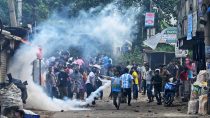
Intelligence sources say Awami League workers acted in the movement disguised as workers. There were arson, road blockades, damage to industrial sites and looting of factory goods in many places. They say some factory owners linked to the banned party openly provoked workers. They say these owners spent a lot of money to speed up the movement. The banned party planned to spend more, and to spread thousands of crores of taka around.
After learning this, the NBR’s Central Intelligence Cell (CIC) and the Income Tax Intelligence and Investigation Unit froze many suspect bank accounts. Intelligence officers say they learned of a plan to split 118 crore taka from one account into small amounts and spread it around. They froze it at once. They say the money would have reached saboteurs if they had not blocked it.
Work stoppages, worker unrest, disorder, protests and factory damage caused heavy losses to garment owners. On Thursday, owners voiced anger and frustration. BGMEA said that if this goes on, owners may decide to close factories under the labor law. The group will hold an emergency general meeting today, Saturday, to take the final decision. BGMEA President Mr. Mahmud Hasan Khan said wage talks and disorder in factories cannot go on together.
He said the group decided to watch the situation. If it does not improve, it will decide in the interest of the industry. He said owners will join the wage board meeting sincerely. He said they cannot accept disorder at the same time. To keep a good talking climate, normal production and discipline must continue in factories.
He also said owners want an acceptable solution through wage talks. But they cannot accept an unstable situation in factories during the talks. Worker groups, on the other hand, called for fair wages instead of closing factories. They also demanded the release of arrested trade union workers and withdrawal of cases. They also asked for treatment for injured workers. They made these demands at a joint press conference at the Dhaka Reporters Unity (DRU) yesterday, Friday.
Mr. Mir Abul Kalam Azad, president of the Swadhin Bangla Garments Workers Employees Federation, said workers have long demanded higher wages. High prices and rent make life very costly. Worker groups have also given a memorandum to the government. He said the latest labor law change cut the wage review period from five years to three. In 2024, a 18 point three party deal raised the yearly wage increase from 5 percent to 9 percent. But this was small compared to the rise in living costs. He said unrest began in 2023 because wages were not set fairly.
He thanked the government for forming a new wage board after three years. He also thanked it for respecting worker groups’ views on choosing worker representatives. He called these positive steps. He warned about factory closures and said closing factories is no solution. He said it would only add uncertainty and unrest for workers. He said there is information about political and business provocation. Workers must stay patient and responsible.
He said workers must not join any act or provocation that blocks the wage board’s work. He said they must not act on the urging of any person or interest group. He urged the government to withdraw cases against harassed and arrested trade union workers and release them. He said the government must arrange treatment for injured workers. He said the government may act against anyone truly involved in damaging factories. But he said workers were not involved in these incidents.
The organizers of the press conference include the Industrial Bangladesh Council (IBC) and Garments Sramik Oikya Parishad (GSKOP). They also include Garments Sramik Shilpo Raksha Jatiya Mancha, Bangladesh Garments Sramik Oikya Parishad and Garments Sramik Parishad.
During protests and work stoppages demanding a 30,000 taka minimum wage, some factories saw damage, road blockades and disrupted production. In response, the government formed a new minimum wage board on 1 November. District and Sessions Judge Mr. Syed Azad Subhani chairs the board. It has worker and owner representatives and one neutral member.
The board has held two meetings. The first meeting was on 4 November. It told worker and owner representatives to prepare their wage proposals and submit them at the next meeting. At the second meeting on 9 November, the worker side proposed a minimum wage of 32,000 taka. The owners got four days and said they will submit on 15 November.
The board has announced a third meeting for Monday, after it gets the owners’ proposal. The agenda has two items. One is the owners’ written proposal on the minimum wage rate. The other is a discussion on the minimum wage recommendation for all classes of workers and staff in the sector.
The minimum monthly wage of garment workers today is 12,500 taka. The last wage structure set this rate in December 2023. This time, worker groups demand a minimum monthly wage of 30,000 taka.