
Widespread Public Suffering as Fuel Prices Surge
Global Volatility Drives Domestic Fuel Price Hike
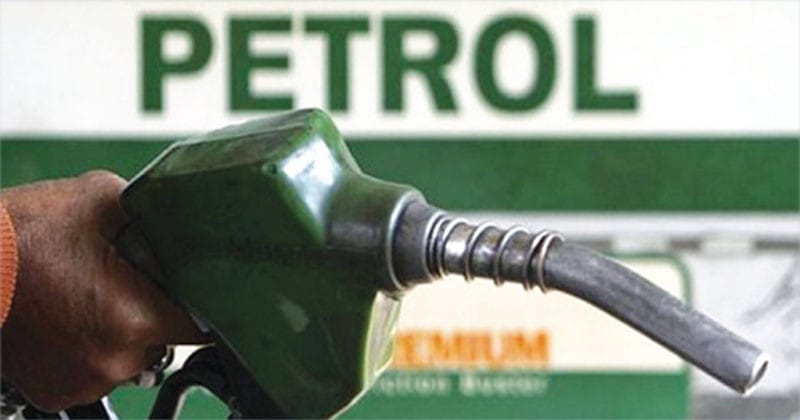
A sharp nationwide reaction has erupted across Bangladesh following a sudden fuel price hike of up to Tk 20 per liter, announced late Sunday night by the Ministry of Power, Energy, and Mineral Resources. Under the new tariffs, diesel rose from Tk 115 to Tk 135 per liter, kerosene from Tk 135 to Tk 155, petrol from Tk 140 to Tk 160, and octane from Tk 145 to Tk 165. The government attributed this drastic measure to ongoing international market instability and the Middle East crisis, which severely escalated import costs. Despite fuel prices remaining comparatively high in neighboring nations like Pakistan, where petrol sells for roughly Tk 172 per liter and diesel for Tk 188, the steep internal adjustment in Bangladesh has immediately sparked widespread socio-economic anxiety and consumer outrage.
Defending the decision, State Minister for Power, Energy, and Mineral Resources Mr. Anindya Islam Amit stated, ‘The government had to adjust oil prices due to the crisis in the Middle East.’ Expressing sincere regret for the immediate public suffering caused by the move, he added, ‘If conditions normalize, efforts will be made to adjust and lower prices back to previous levels or even further.’ Meanwhile, BNP Acting Secretary General Mr. Ruhul Kabir Rizvi echoed the administration’s stance, highlighting that domestic fuel prices remain low compared to international markets and emphasizing that the government continues to absorb significant losses by providing ongoing subsidies.
Financial figures released by Bangladesh Petroleum Corporation (BPC) Chairman Md. Rofiqul Islam underscore the severe fiscal strain leading to the price adjustment. He revealed that the state-run corporation was losing Tk 90 per liter on diesel alone, incurring a staggering cumulative loss of Tk 22,875.66 crore from its own funds between March and August. Monthly losses peaked at Tk 7,866 crore in April and Tk 6,198 crore in June, with September losses projected to top Tk 5,000 crore. These heavy financial burdens made the previous subsidy structure unsustainable for BPC.
Economic experts, however, warned of widespread systemic disruptions. Dr. Nazneen Ahmed, Executive Director of the Centre for Policy Dialogue (CPD), stated, ‘The fuel price hike will exert multi-faceted pressure on the economy,’ pointing out that agriculture and transport will suffer first before impacts spill over into manufacturing. Criticizing the simultaneous price surge across all categories, she noted, ‘Instead of hiking all fuel prices simultaneously, the government should have taken a more planned, phased approach.’ She argued that diesel and kerosene prices should have remained untouched to protect low-income groups and public transit systems.
Echoing structural concerns, Dr. Khondaker Golam Moazzem, Research Director at CPD, acknowledged that while the hike eases BPC’s Tk 89 per liter subsidy burden, abrupt price hikes are an unhealthy long-term strategy. He cautioned against relying solely on sporadic increases, advocating instead for the reinstatement of a market-based automatic pricing mechanism every 15 to 30 days to ensure predictability. Addressing smuggling concerns, Dr. Moazzem added, ‘While the risk of smuggling cannot be dismissed, it is not the primary factor behind the decision,’ stressing that fixing internal fuel policy weaknesses is more vital than attributing decisions to external border leakage.
The industrial sector expressed deep concern over operational viability amidst uncontained inflation. Mr. Anwar-Ul Alam Chowdhury (Parvez), President of the Bangladesh Chamber of Industries (BCI), stated, ‘The fuel price hike will inflate industrial, production, and transport costs, driving up inflation.’ He warned that unannounced adjustments of over 15 percent would force commercial enterprises into severe pressure, inevitably resulting in workforce reductions, business contraction, and defaulted loans. He cautioned that these adverse developments could ultimately erode public trust in the administration and trigger a much broader socio-economic crisis.
Timing has amplified public frustration, as the price hike coincided directly with the declaration of the 9th National Pay Scale. Economists observed that while pay revisions usually exert minimal isolated inflationary pressure, introducing them alongside fuel increases elevates public inflationary expectations dramatically. Furthermore, prominent economist Professor Anu Muhammad sharply criticized the administration’s procedural lack of transparency, stating that the decision was taken abruptly without any prior public consultation. He argued that the government should have reduced internal duties and taxes on fuel to buffer costs instead of passing the full burden onto consumers.
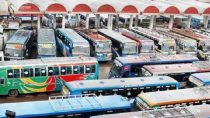
The transport and agricultural sectors felt immediate fallout, with bus conductors arbitrarily doubling fares and causing heated altercations across city transit routes. Mr. A.S.M. Ahmed Khokhan, General Secretary of the Bangladesh Road Transport Owners’ Association, stated that formal proposals for fare adjustments relative to fuel prices are being presented to the government, while BRTA officials confirmed upcoming formal stakeholder negotiations. Concurrently, diesel-dependent farmers face soaring irrigation costs for rice and essential crops, threatening crop yields and burdening low-wage earners, day laborers, and garment workers who already face severe living pressures.
Political opposition parties issued sharp condemnations against the unilateral policy move. Mr. Bazlur Rashid Firoz, General Secretary of the Socialist Party of Bangladesh (BASD), stated, ‘Rather than providing effective solutions, the government has imposed another heavy burden on ordinary people struggling under free-market pressures.’ Adding to the critique, Mr. Abdullah Kafi Rattan, General Secretary of the Communist Party of Bangladesh (CPB), condemned the administration, asserting, ‘Instead of controlling market syndicates, the government is shifting losses onto the public through price hikes and tax burdens, directly squeezing the working and middle classes.’
The negative economic sentiment immediately impacted capital markets, causing a sharp downturn on the Dhaka Stock Exchange (DSE). Following the fuel price announcement, trading opened with widespread price drops across listed companies. By the close of the trading session, only 100 companies managed to register price gains, whereas 254 companies saw their share prices decline and 32 remained unchanged. On the government’s side, Mr. Sheikh Faridul Islam, State Minister for Environment, Forest, and Climate Change, remarked that systemic transformations do not occur overnight, maintaining that continuity remains essential in national energy, oil, and gas policies.