Trapped in a Digital Trafficking Web
How Bangladeshi Migrants Fall Victim to ‘Cyber Slavery’ in Cambodia
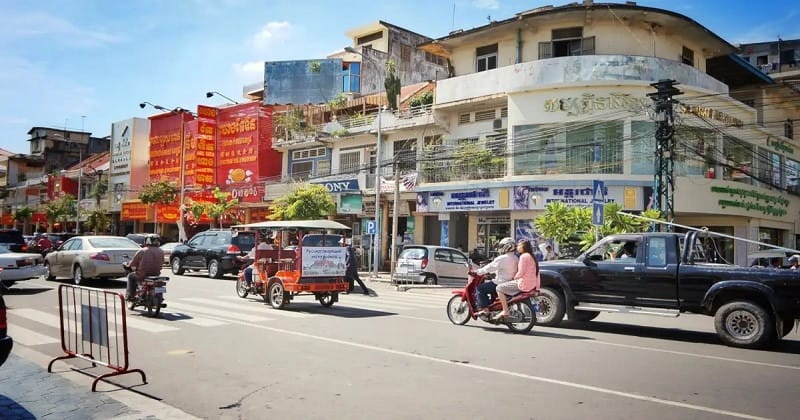
A human trafficking ring disguised as a digital recruitment network has lured thousands of Bangladeshi job seekers, including 23-year-old graduate Mr. Sajjad Hossain, into Cambodian scam compounds under the pretext of high-paying jobs. Lured through a WhatsApp job advertisement promising a data-entry role in Phnom Penh, Mr. Sajjad paid BDT 450,000 (USD 3,640) to brokers, only to have his passport confiscated within 48 hours of arrival. Mr. Sajjad’s ordeal highlights the emerging phenomenon termed cyber slavery by the UN and Amnesty International, where victims are stripped of their freedom and forced into running online scams under high-security confinement.
The recruitment mechanism relies on a sophisticated three-tier network made up of illicit recruiting agencies, corrupt travel operators, and local brokers who infiltrate trusted social media groups on Facebook, WhatsApp, Imo, and Telegram. Migration expert and researcher Mr. Riaz Ahmed warned, ‘Unfortunately, many migrants travel abroad trapped in the web of these multinational syndicates without verifying the legitimacy of the recruiting agencies, employment contracts, employer details, or the economic conditions of the destination country. But as soon as they set foot there, reality turns upside down. Every promise eventually reveals itself as a scam, leaving them hostage to global criminal syndicates.’
The absence of a Bangladeshi diplomatic mission in Cambodia exacerbates the crisis, leaving trapped workers without immediate consular support or safety channels. Mr. Syeed Saiful Haque, Chairman of the WARBE Development Foundation, stated, ‘Cambodia is not an attractive or lucrative destination for Bangladeshi workers. Dishonest recruiting agencies created this market by dangling false hopes of high-paying jobs in the IT and hospitality sectors. Brokers and certain travel agencies exploit people’s desperation, pitching it as a cheaper, faster, and easier alternative to traditional migration routes.’ While official migration costs range between $654 and $1,258, brokers extort $2,835 to $4,450 from desperate individuals in a country where average monthly wages hover around $329.
Upon arrival in Cambodia, the illusion dissipates immediately as victims’ passports are confiscated at the airport and individuals are sold between scam operators for $1,500 to $4,000. Confined inside compounds, victims are subjected to extortion, with syndicates contacting families back home to demand up to $3,000 in ransom under threat of reselling the victims to worse operators. Some victims report offering to work non-fraudulent roles, only to be ignored while brokers pressure their families for more money, or completely cut off communication after receiving thousands of dollars in extortion payments.
Once inside these compounds, victims undergo forced indoctrination into digital cyber fraud, including online romance scams (pig butchering), fictitious investment schemes, and cryptocurrency fraud targeting global victims. Mr. Promit Khondokar, spokesperson for the voluntary organization ‘Bangladesh Probashi Oikkya Foundation,’ highlighted the financial ruin facing affected families, noting, ‘Numerous families have lost their entire life savings. They have nothing left to leverage to rescue their sons.’ He added that returning victims face massive hurdles seeking legal justice at home due to an absence of receipts or written evidence for financial transfers made to brokers.
A 2026 United Nations report estimates that approximately 300,000 people worldwide are currently held captive inside similar high-security compounds and forced to execute cyber fraud. In response to growing international pressure, Cambodian authorities raided 118 locations over six months, arresting nearly 5,000 individuals, and enacted a dedicated anti-scam law prescribing life imprisonment for severe offenders. However, enforcement remains complex, as crackdowns have prompted criminal syndicates to decentralize their operations, moving away from large compounds into smaller residential apartment cells across Phnom Penh while journalists face arrests for covering these operations.
Data from the Bureau of Manpower, Employment and Training (BMET) reveals that 17,031 Bangladeshi workers departed for Cambodia between June 2023 and July 2026, with an estimated 98 percent failing to receive their promised employment. Since June 2026, the Government of Bangladesh has repatriated 583 trafficked citizens, with around 1,800 cyber fraud victims returning home this year after paying steep fines for visa overstays. Returning workers confirm that legitimate job opportunities do not exist in these setups, warning that anyone traveling through these unverified channels will inevitably fall into the traps set by criminal syndicates.
Mr. Sajjad Hossain was rescued during a raid after spending four months in captivity and subsequently returned home, yet he remains burdened by the massive debt his family incurred to secure his migration and release. The seamless operation, stretching from tech-enabled recruitment in Bangladesh to forced labor and extortion in Phnom Penh, exposes a critical monitoring gap in tracking outbound labor migration to countries without direct diplomatic representation. As hundreds of young Bangladeshi job seekers continue to respond to fraudulent social media advertisements, the cyber slavery pipeline remains an ongoing human rights and humanitarian crisis.