
How Shuvendu’s Police Put Indian Muslim Elderly Man Through Hell by Tagging ‘Bangladeshi’
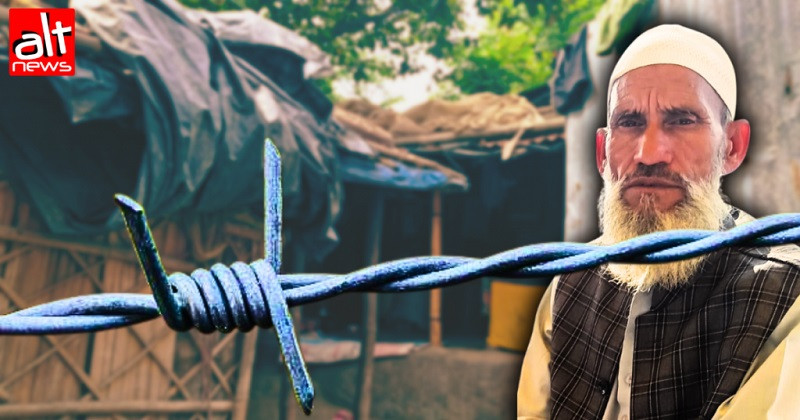
In the intervening night of June 19 and 20, police from Dalkhola police station in West Bengal’s Uttar Dinajpur district allegedly picked up a 66-year-old Muslim man, Jalil Akhtar, from his home in Bagroi village under Karandighi block. His family members, who were sleeping in the same room, came to know about his arrest the next morning.
The 66-year-old man, whose name appears in both the 2002 and 2026 Special Intensive Revision (SIR) electoral rolls, was arrested on allegations that he was a “Bangladeshi”, his family told Alt News. After spending nearly three months in different holding centres and judicial custody, Mr. Akhtar was produced before the Additional Chief Judicial Magistrate of Islampur court on September 2. During the hearing, the investigating officer submitted a written report stating that the identity documents submitted by Mr. Akhtar were valid. Despite this, Mr. Akhtar has not yet been granted bail. The next hearing in the case is scheduled for September 10.
During his nearly three months in custody, Mr. Akhtar was first kept at two holding centres and later detained at Islampur jail. His family alleged that they were told he would be pushed back into Bangladesh. They also alleged that throughout this period, the police failed to prove that Mr. Akhtar’s citizenship or legal documents were fake. This has raised questions about why he was arrested in the first place despite his name appearing on the recent SIR electoral roll.
Mr. Akhtar’s brother, Matiur Rahman, questioned the arrest, saying, “My brother is an Indian, we have all the documents, and he has never even seen the border of Bangladesh. Despite this, he was arrested merely on suspicion of being a ‘Bangladeshi’ and kept in a holding centre and jail, which the police could not even prove. Was he kept detained for so long simply because we are Muslims and live in a Muslim-majority border district?”
Picked up in the middle of the night without informing the family
According to the family and local residents, Mr. Akhtar used to sleep on a charpoy in front of his one-room house. When his wife, Tofa Bibi, woke up on the morning of June 20 and did not find him, she initially thought he had gone to offer the Fajr prayer. But when she saw that his clothes were still hanging in the cupboard, she became frightened.
Mr. Akhtar, a landless elderly man who depends on his two sons, both migrant workers, was first searched for by his brother Mr. Matiur. Along with villagers, he searched the surrounding areas and jungles throughout the day. Later, a local resident told them that a police vehicle had entered the village the previous night.
Mr. Matiur contacted the Bazar Gaon police camp, which had recently been established under Dalkhola police station, and learned that police had picked up a man from their village on suspicion of being an illegal Bangladeshi migrant.
When the family went there, they found Mr. Akhtar sitting shirtless on the floor of the lock-up. The family alleged that the police did not even allow him to put on his shirt. Mr. Akhtar later told his family that while he was being taken away from the populated area, police pointed a gun at him to keep him silent.
The struggle to prove his citizenship
“We went to the camp and tried to explain to the police officer that Jalil Akhtar’s name was not only on the 2026 SIR list but also on the 2002 list, and therefore he should be released. But the police threatened us in return, saying, ‘How dare you threaten me? The days of threatening are over… the government has changed now,'” Mr. Matiur alleged.
Another officer at the camp asked for time to verify the documents and assured them that Akhtar would be released if everything was found to be in order. However, that same morning, Mr. Akhtar was transferred to a holding centre in Nizampur, near Chakulia.
To prove Mr. Akhtar’s Indian citizenship, his family collected the 1995 voter list and the 2002 SIR list, both of which contain his name. They also collected land documents linking him to his father, Roushan Ali, as well as a permanent resident certificate issued by Bazar Gaon-II panchayat.
On July 9, they submitted these documents at Dalkhola police station and later visited the office of the district Superintendent of Police (SP). At both places, the police asked for time to verify the documents and assured the family that Mr. Akhtar would not face any harm if he was an Indian citizen.
The family further said that police claimed they were under heavy pressure from higher authorities to identify and deport illegal Bangladeshis and that they were simply following orders.
Attempts to push him into Bangladesh
However, as the days passed, Mr. Akhtar remained in police custody and was moved from one holding centre to another. Dulal Rajbanshi, an organiser of the Voter Rights Protection Coordination Committee, a group formed to assist people whose names were excluded from the 2026 SIR list, provided legal assistance to Akhtar’s family.
He alleged, “We managed to stop the police twice from sending Jalil Akhtar to Bangladesh. After failing to send him to the no-man’s land, the police finally filed a false FIR and produced him before the court.”
According to Mr. Rajbanshi, Mr. Akhtar was transferred with the intention of sending him to Bangladesh through the Phulbari border near Siliguri. He said the state police keep detained people at temporary holding centres before handing them over to the Border Security Force (BSF).
In Mr. Akhtar’s case, he was taken from Nizampur to Phulbari on July 6. After receiving the information, the family and their supporters went to the district magistrate (DM) in Raiganj the following day. The DM directed them to speak to the SP in Islampur.
After travelling 110 kilometres to Islampur to meet the SP, they were also told about “pressure from higher authorities”. Later, they learned that Mr. Akhtar had been brought back to the Chakulia holding centre.
Subsequently, on the instructions of the officer-in-charge (IC) of Dalkhola police station, Mr. Akhtar’s family, including his 90-year-old aunt and other relatives, were asked to appear at the police station. However, the police did not allow the relatives to meet Mr. Akhtar and only accepted the death certificate of one of his deceased brothers.
Rajbanshi said that the BSF often tries to forcibly push people identified as Bangladeshis back across the border at gunpoint. With the Border Guard Bangladesh (BGB) and villagers in Bangladesh now alert to such attempts, many people are allegedly being left stranded in the “no-man’s land”.
Mr. Akhtar’s family feared the same fate for him. Matiur said the IC himself had admitted that the police had a list of 500 people who were to be sent back.
‘It would be better if you killed me’
During a meeting with his family at the detention centre, Mr. Akhtar broke down. Mr. Matiur said Mr. Akhtar cried and told them, “What will I do if you send me to Bangladesh? I do not know anyone there, I have never been to that country. I cannot even beg. It would be better if you killed me than pushing me into Bangladesh.”
Meanwhile, a BSF team visited Mr. Akhtar’s home as part of an investigation. The family said the BSF officers expressed anger at the state police for their apparent reluctance to investigate the matter and assured them that they would not send any Indian citizen to Bangladesh.
On July 20, local residents organised a protest against the arrest, but police arrived and dispersed the gathering.
The following day, July 21, there were allegations that another attempt was made to send Mr. Akhtar to Bangladesh. That same afternoon, the matter was publicised through a press conference at the Raiganj Press Club and spread on social media so that police could not portray Mr. Akhtar as a “missing” person. Finally, on July 22, police informed the family that Mr. Akhtar would be produced before a court.
Discrepancies between the FIR and the case diary
According to the FIR filed by Dalkhola police, Mr. Akhtar was detained from Nizampur at 1:05 am on June 20. Nizampur is about 35 kilometres from his home and was the location of the holding centre.
The FIR claimed that Mr. Akhtar and two others were detained from Nizampur as illegal immigrants and that all three were residents of Thakurgaon district in Bangladesh.
Police claimed that during questioning, Mr. Akhtar admitted that he had entered India through the Hili-Malda border 24 years ago.
However, documents submitted by the family show that his name appears on the 1995 voter list and the 2002 SIR list. If he had entered India 24 years ago, it would be impossible for his name to have appeared on the voter list as early as 1995.
In the case diary submitted to the court, police stated that Mr. Akhtar had also voted in the 1982 election. It further stated that in 1982 he was working as a rickshaw puller in Delhi and could not speak Bengali properly. This directly contradicts the claim that he entered India 24 years ago and does not establish any connection between him and Bangladesh.
According to the police report, Mr. Akhtar was born in 1959 or 1960. However, police are using the absence of any documents from before 1982 and the lack of a direct link to his father through land documents as grounds for questioning his citizenship.
In response, Dulal Rajbanshi said, “Under the Indian citizenship law, people born before 1987 do not need to show their parents’ birth certificates to prove their citizenship. Moreover, the main purpose of both the 2002 and 2026 SIR processes was to remove illegal names from the electoral rolls, and Mr. Akhtar’s name appears on both. He is being kept detained only to implement the BJP’s political agenda.”
The September 2 hearing
After police postponed the hearing four times on the pretext of verifying the documents, the judge and the defence lawyer questioned the IC about the validity of the documents during the September 2 hearing at the Islampur court.
Later in the afternoon, police submitted a report finally acknowledging that Mr. Akhtar’s voter card and PAN card were genuine and that his records in the 1995 and 2002 lists were also genuine.
However, police said they were still waiting for an email response regarding the information on his Aadhaar card.
Lawyer Firoz Ahmed alleged, “The police are now creating confusion over the issue because Mr. Akhtar’s place of birth and present place of residence are different, as if changing one’s place of residence is a crime.”
Mr. Matiur said, “Mr. Akhtar is extremely poor, he has no land of his own and he is living only 5 kilometres away from his place of birth. As a result, an attempt is being made to make him an ‘easy target’ and portray him as a Bangladeshi.”
When asked about the allegation that Mr. Akhtar was arrested at gunpoint, Dalkhola police station IC Shankha Chatterjee dismissed the claim and sarcastically said, “A stick is enough to arrest a 66-year-old man, there is no need for a gun. Tell the family that we used Bofors cannons.”
He further said, “We have submitted our investigation to the court. Now the court will decide whether he is an Indian, Bangladeshi, Pakistani or Cuban citizen. We have not found any documents from the time he was 21 years old; all the documents are from the age of 22 to 66.”
When questioned about the discrepancies between the FIR and the case diary, the IC did not give a clear answer. Instead, he said, “I do not want to get into politics. But there are many people in Uttar Dinajpur who have cards from both India and Bangladesh. How they crossed the border is better left unsaid.”
The efforts of Mr. Akhtar’s family and rights activists may have temporarily prevented him from being pushed across the border, but their legal battle is far from over. For this 66-year-old man, the question of when he will finally be released remains unanswered.