India’s 3-Point Proposal to End Russia-Ukraine War
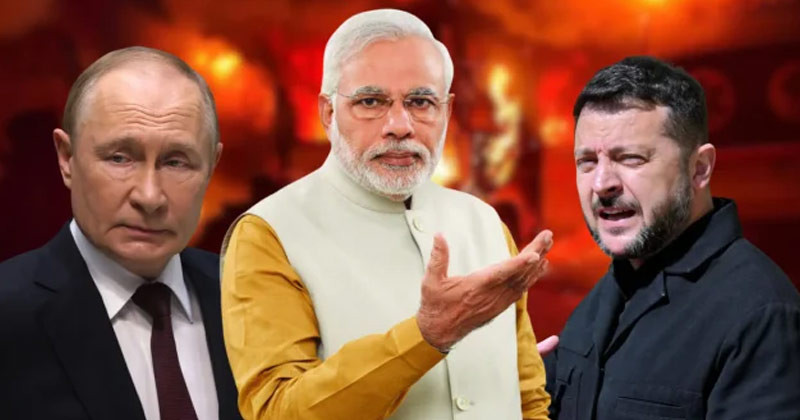
India has proposed a comprehensive three-point ceasefire plan aimed at mitigating the economic and humanitarian toll of the Russia-Ukraine war as it enters its fifth year. The proposal was officially presented to Kyiv during Indian External Affairs Minister S. Jaishankar’s visit last month, as reported by NDTV. The initiative focuses on immediate measures to stabilize the region while paving the way for broader, long-term peaceful negotiations between the two nations.
Confirming the receipt of India’s proposal, Ukrainian Foreign Minister Andrii Sybiha stated that among the four international ceasefire proposals Kyiv has received, India’s initiative is the most comprehensive. Mr. Sybiha noted, ‘The other three proposals came from Turkey, Egypt, and the United States,’ adding that while Kyiv is ready to discuss peace, any effective agreement must extend beyond freezing frontlines to safeguard critical port and energy infrastructure.
The core of New Delhi’s plan consists of three targeted points: halting all attacks on energy facilities and critical infrastructure, ensuring the unhindered transport of grain and fuel through Black Sea ports, and completely ceasing strikes on commercial shipping across the waterway. While Turkish and Egyptian proposals concentrate primarily on Black Sea shipping and grain exports, and the U.S. proposal focuses on energy strikes, India’s plan uniquely unifies and expands these critical domains.
The diplomatic effort has drawn international attention, including praise from Russian President Vladimir Putin regarding Indian Prime Minister Narendra Modi’s mediation stance. Commenting on the initiative, Mr. Putin remarked that Mr. Modi holds good ideas for finding an acceptable resolution to the ongoing conflict. Since the outbreak of war, India has continuously maintained active lines of communication with both Moscow and Kyiv, advocating steadfastly for a peaceful resolution through constructive dialogue.
Reaffirming India’s proactive commitment to peace, External Affairs Minister S. Jaishankar emphasized that New Delhi is actively engaged in direct dialogue with both parties rather than watching from the sidelines. During his visit to Kyiv, Jaishankar reiterated India’s fundamental position on the conflict, stating, ‘The conflict cannot be resolved on the battlefield, and a political solution must be pursued through negotiation,’ reinforcing India’s push for diplomatic compromise.