
India’s 750 million youth demand a new future
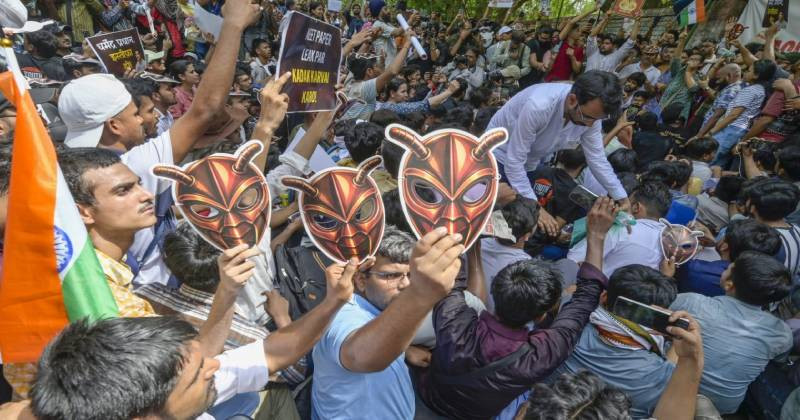
Nearly 750 million Indians under the age of 30 represent a demographic force capable of reshaping the country’s economic and political landscape. Larger than the combined populations of the United States and the European Union, this generation represents a huge workforce, consumer market and political force. But its enormous size is colliding with limited opportunities for secure and quality employment.
This tension erupted in youth protests across India in 2026. The immediate trigger was alleged question-paper leaks in national eligibility and admission exams, but the anger quickly spread to broader concerns over exams, unemployment and limited opportunities. After India’s Chief Justice described unemployed young people as “cockroaches,” young people embraced the insult online, turning it into a symbol of protests demanding employment and education reforms. The “Cockroach Janata Party” or CJP quickly became a symbol of public frustration.
The Indian Express described the unrest as evidence of a deeper employment crisis rather than merely an examination controversy. The political impact was also significant. After weeks of mass protests, India’s Education Minister Mr Dharmendra Pradhan resigned in July.
Prime Minister Mr Narendra Modi formed a task force to review reforms to the examination system. Reuters reported that the protests exposed weaknesses in India’s efforts to turn its demographic advantage into sustained economic opportunities.
Government data shows youth unemployment at 13.6% in urban areas and 8.3% in rural areas. The Azim Premji University’s State of Working India 2026 report said India had about 63 million graduates aged 20 to 29 in 2023, including around 11 million unemployed. Graduate unemployment has remained around 35% to 40% for decades. Although higher education has expanded, graduate employment has not grown at the same pace.
India Today reported that nearly two-thirds of unemployed young people are graduates. Competition for secure government jobs also highlights the scale of the problem. The Wall Street Journal reported that more than 500,000 people competed for just 583 government positions in Jharkhand. This illustrates the extraordinary appeal of government jobs among young Indians seeking stability. A United Nations Population Fund survey in July 2026 found that nearly 47% of young people were very worried about their future amid communal conflict, economic uncertainty and inequality.
India’s digital transformation is also increasing young people’s political influence. Smartphones, social media and digital financial platforms are strengthening their ability to organise and demand accountability. Political mobilisation around young people during the 2026 Tamil Nadu election showed how digital networks are increasingly complementing traditional political organisations. On August 18, the “Cockroach Janata Party” warned that it would launch nationwide programmes if the government failed to implement its assurances regarding cases filed against protesters.
Above all, India’s 750 million people under 30 are more than a demographic statistic. They are the country’s largest economic and political force, with the potential to accelerate growth for decades. But that potential depends on whether the government can turn educational aspirations into productive employment, expand secure job opportunities and restore public trust in institutions. Without a safe and promising future, the generation that could drive India’s rise could instead become the country’s strongest source of political pressure.
The recent protests serve as an early warning: a demographic dividend does not come from a large population alone. It requires jobs, opportunities and credible governance.