India’s Youth Movement Demonstrates the Power of Harmony
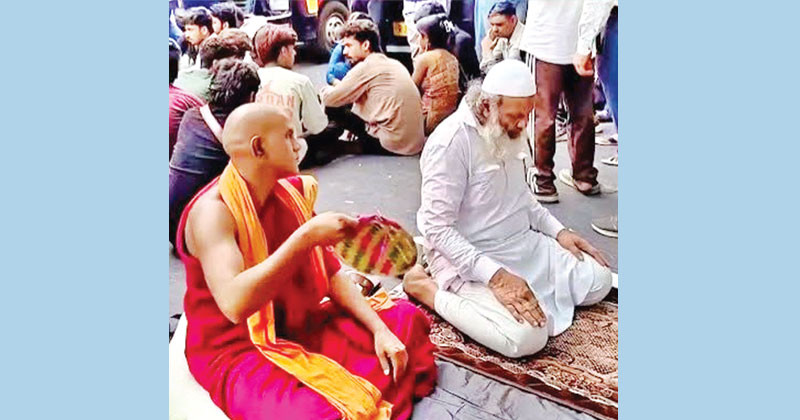
India’s youth-led mass movement in July has not brought down Prime Minister Narendra Modi’s BJP government, but it reportedly put considerable pressure on the ruling establishment. The protests, which began over alleged irregularities and question-paper leaks in the NEET-UG examinations, spread from New Delhi to Bihar, West Bengal, Mumbai, Punjab, Haryana and other parts of the country. The movement was organised under the banner of the Cockroach Janata Party (CJP), a satirical name aimed at the ruling BJP. Despite its unusual identity, the movement relied heavily on digital platforms, information technology and coordinated online campaigns. Within a short period, the campaign attracted large numbers of young people. The most striking feature of the movement, however, was its message of social and religious harmony. Protest sites reportedly brought together Hindus, Muslims, Sikhs, Christians and Buddhists, as well as people from marginalised communities. Their participation presented a picture of unity that stood in sharp contrast to India’s increasingly polarised political environment.
At protest sites, Muslim demonstrators were seen praying alongside people from other communities. Protesters shared food regardless of religious identity, while people stood together and raised slogans such as ‘Inquilab, Inquilab; Zindabad, Zindabad’. Women wearing burqas and hijabs also took part in demonstrations in several locations. This solidarity became particularly important because the movement faced strong criticism from the ruling establishment. Protesters were accused of creating instability and pursuing a violent or ‘jihadi’ agenda. Claims were also made that the movement had significant support from Pakistan, Bangladesh and the United States. CJP founder Abhijit Deepak responded through digital campaigning and presented data challenging those claims. According to the movement’s own figures, around 95 percent of its followers were Indian, while Pakistan and Bangladesh did not rank among the top five sources of followers. The episode highlighted the growing importance of social media in Indian politics.
The BJP itself has used digital platforms effectively for political mobilisation and campaigning over the past decade. The youth movement demonstrated that the same tools can also be used by opponents to challenge an established political narrative. The movement also exposed the limits of political labelling. India’s ruling party has frequently faced criticism for describing protests and dissent through terms such as ‘anti-national’, ‘urban Naxal’, ‘Left conspiracy’, ‘toolkit’ and ‘Khalistani infiltration’. Muslim protesters at Shaheen Bagh during the movement against the Citizenship Amendment Act also faced allegations of extremism and anti-national activity. Similar accusations were directed at farmers during their protests. Such labels can create a political divide between protest movements and the wider middle class, particularly urban voters. But the July movement appears to have presented a different challenge because its participants were largely young people affected by education, employment and economic uncertainty.
Among those joining the protests were examination candidates, job seekers, students, graduates, coaching-centre students and unemployed young people from small and medium-sized cities. Many came from middle-class and lower-income families and were concerned about their educational and professional futures. The movement therefore reflected concerns that went beyond examination irregularities. Youth unemployment in India has emerged as an important economic and political issue. The figures cited in the context of the protests indicate that the youth unemployment rate among individuals aged 15-29 was 16.2 percent in June 2026, compared with 13.8 percent in April 2025. Another economic issue related to the employment problems faced by educated youth is discussed in the State of Working India report by Azim Premji University. These economic issues have made the demand for accountability and equality more pertinent than ever before. In addition, farmers from the states of Punjab and Haryana have been raising their voices over reasonable prices for agricultural goods.
The movement’s theme of unity also poses a challenge to politics based on religion. India’s diverse population is made up of communities with very long histories. Dividing these citizens along religious lines may pose a danger to the country’s social fabric. The peaceful message of coexistence conveyed by the movement has thus gained popularity. The movement has demonstrated that the country’s youth are capable of using digital media to organise themselves and encourage people from other communities to join their political movement. The BJP government’s motto, “Sabka Saath Sabka Vikas”, meaning development for all with the help of all, has also faced criticism in recent times. This is mainly due to the rising number of unemployed young people in the country. In recent years, India’s relations with some of its neighbouring countries have also been difficult. Tensions and diplomatic differences with countries including Bangladesh, Sri Lanka, Nepal, the Maldives, Bhutan and Pakistan have contributed to concerns about India’s regional position.
The July movement, therefore, offers a broader lesson. Political differences do not necessarily have to become religious or communal divisions. A movement centred on shared concerns can unite individuals across different religions and social backgrounds. Perhaps the most powerful message to have emerged from the streets of India is one of coexistence. The country’s young generation has demonstrated that its political aspirations are not limited to questions of power. They also include fair opportunities, accountable institutions, social harmony and peaceful coexistence. In that sense, the movement has provided an important lesson: India’s diversity can become a source of strength when citizens choose solidarity over division.
Shafiul Alam, back from New Delhi