Prospects for a Saudi-Pakistan-Turkey Defense Alliance
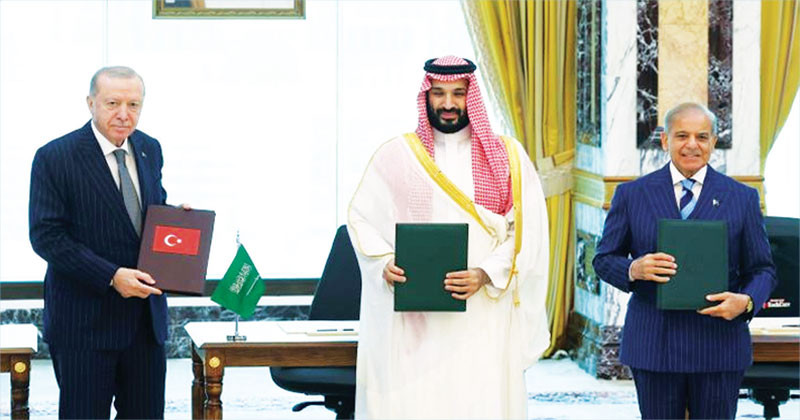
On August 7, 2026, Saudi Arabia, Pakistan and Turkey signed the Makkah Joint Defense Agreement at Al-Safa Palace in Mecca. Saudi Crown Prince Mohammed bin Salman, Turkish President Recep Tayyip Erdogan and Pakistani Prime Minister Mohammad Shahbaz Sharif signed the agreement on behalf of their respective countries.The agreement builds on the Strategic Mutual Defense Agreement (SMDA) signed by Saudi Arabia and Pakistan on September 17, 2025, in Riyadh. The Makkah agreement has since attracted international attention because of its potential impact on security and geopolitics in the Muslim world, particularly in the Middle East.
According to the joint declaration, the agreement is a collective defense arrangement under which an attack on any one of the three countries will be considered an attack on all three. It seeks to strengthen defense cooperation, protect common strategic interests and develop a stronger collective security framework. The agreement covers broad areas of military cooperation. However, details about its duration, joint military infrastructure, arms transfers, military exercises and intelligence sharing have not been made public. The three countries have also stressed that the agreement is not directed against any particular country and is intended to support regional stability. It is therefore presented as a defensive rather than an aggressive arrangement.
Strategic Importance of the Three Countries
Saudi Arabia, Pakistan and Turkey are among the most influential countries in the Muslim world, although their strengths are different. Saudi Arabia holds a unique religious position as the home of the Holy Kaaba, the Prophet’s Mosque and other major Islamic sites. The country hosts millions of Muslim pilgrims who perform Hajj and Umrah each year. Besides, it is one of the leading energy producers globally, with rich deposits of oil and natural gas.
While Pakistan faces a more difficult economic situation, the country still has significant military and technological potential. The country is known to have nuclear weapons and experience in manufacturing satellites, drones, missiles, airplanes, warships, tanks and other military hardware. Thus, both its military power and defense sector make the country strategically important to the region.
Turkey is located in an important area connecting Asia and Europe and has historically been known for its political and military influence. As a member of NATO, Turkey has developed considerable military capabilities in drone and aircraft production, as well as naval technology. The synergy between Saudi financing, Pakistani defense expertise and Turkish military technology might provide many benefits for the three countries. Collaboration in defense production, technology and research could also help the countries develop economically and technologically.
Could It Expand to Become a Larger Alliance?
An additional issue associated with the alliance is its potential for further expansion. In connection with the signing of the Saudi-Pakistani defense deal in 2025, Pakistan’s Defense Minister Khawaja Asif stated that other countries, including Arab states, could become members of the agreement.
Turkey’s participation has now expanded the original framework. The Organisation of Islamic Cooperation has 57 member states, most of which are Muslim-majority countries. If additional states eventually join, the arrangement could develop into a much larger security partnership. Countries such as Iran, Iraq, Kuwait, Qatar, the United Arab Emirates, Oman, Egypt, Syria, Jordan, Yemen, Afghanistan, Uzbekistan and Tajikistan could potentially be part of future discussions. Bangladesh could also consider the possibilities if the agreement develops into a broader multilateral framework.
Better relations between Iran and Saudi Arabia might make regional collaboration more feasible than ever before. Iran and Egypt possess significant military strength, while countries such as Kuwait, Qatar and the UAE have substantial financial resources. Their involvement could greatly enhance the importance of any broader coalition. Still, broadening the coalition may involve delicate diplomacy. Muslim-majority countries have different foreign policies, security interests and relations with major global powers. Building consensus among them would therefore be a major challenge.
A Question of Strategic Independence
The agreement also raises a broader question about security dependence. Recent conflicts in Iraq, Afghanistan, Libya, Syria, Palestine and Lebanon, as well as tensions involving Iran, have reinforced debates over the ability of countries to protect their own security interests. Western countries established NATO in 1949 as a collective defense alliance. Today, NATO has 32 members. The Warsaw Pact was later formed in 1955 by socialist states but was dissolved in 1991 following the collapse of the Soviet Union.
The emergence of a stronger defense partnership among Muslim countries could therefore alter the global balance of power. Such a partnership would not necessarily have to be directed against the West. It could instead emphasize collective security, technology and strategic autonomy. The Muslim world consists of approximately two billion people and has huge reserves of natural resources, large markets and substantial economic power. Cooperation in defense, technology, business and industry may allow these states to become less dependent on other powers and form a stronger bloc on the international stage.
However, for this idea to work, Muslim nations should settle their disputes peacefully, respect each other’s sovereignty and refrain from fighting among themselves. An effective union should not be based solely on military might but should also include political and economic cooperation. The Makkah Joint Defense Agreement could therefore become an important first step toward a broader security framework among Muslim-majority countries. Whether it develops into a larger alliance will depend on the willingness of other states to cooperate and, more importantly, on the ability of its founding members to turn the agreement into practical and sustainable cooperation.
Author: Engineer and Statesman
Jalal Uddin Omar