

Jamalganj Mine: 5.5 Billion Tons Coal Reserve Sparks Gas Conversion Hopes
Mohsin Razu
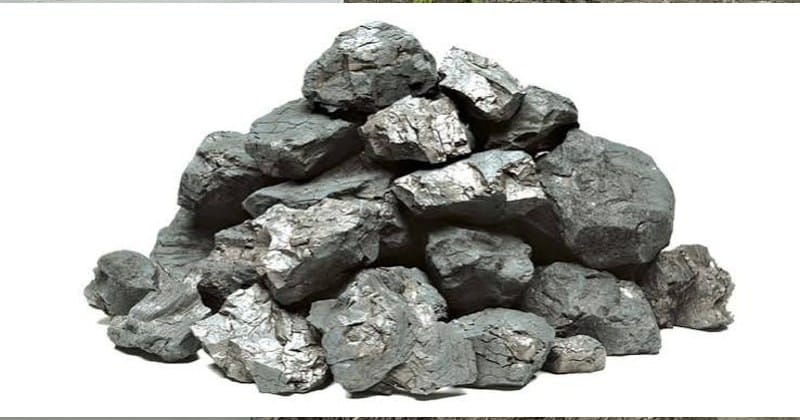
The massive mineral wealth of the Jamalganj coalfield in Joypurhat, northern Bangladesh, has reemerged as a vital prospect for overcoming the nation’s ongoing energy crisis. Recent surveys indicate that the total coal resource has multiplied to approximately 5.5 billion tons, sparking renewed discussions among policymakers and energy experts. Originally discovered in 1962 under a UN-sponsored program, the deposit was historically estimated at around 1 billion tons. Spanning an area of approximately 64 square kilometers, the coalfield features thick seams reaching up to 44 meters in certain areas, as determined by data analysis from 14 exploratory wells.
Despite these immense reserves, extraction has remained sidelined for decades due to the extreme depth of the deposit. While most domestic coalfields sit at depths of 150 to 500 meters, Jamalganj coal is situated between 640 and 1,158 meters underground. Constructing a conventional mine at this depth exponentially increases production costs and technological risks. Consequently, experts argue that remaining fixated on conventional mining is impractical, making it essential to evaluate alternative modern technologies capable of unlocking this deep subterranean wealth safely and efficiently.
To bypass the barriers of deep extraction, energy researchers have increasingly focused on Underground Coal Gasification as the most viable path forward. Under UCG technology, coal is not brought directly to the surface; instead, it is converted into fuel gas in situ through controlled underground processes. The resulting gas can be purified for power generation and industrial applications. A comparative analysis across five domestic coalfields identified Jamalganj as the premier site for this approach, assigning it a striking feasibility index of 93.6 percent according to recent scientific studies.
Recent 2026 exploration activities also tested the potential for extracting Coal Bed Methane by drilling three wells to analyze seam gas volumes. Initial analysis of two wells revealed a relatively low potential for commercially viable methane extraction, though evaluation of the third well remains ongoing. Experts clarified that low CBM potential does not render the deposit worthless. Unlike CBM, which isolates methane, UCG converts the entire underground coal deposit into energy gas, cementing its relevance for the field’s future development.
Bangladesh’s power sector faces mounting pressure from heavy import dependency and rising fuel shortages. Data from the international shipping tracker Kpler shows that coal imports reached 17.34 million tons in 2025, while National Board of Revenue figures indicate imports surged further to 20.7 million tons in fiscal year 2026. The country’s six largest coal-fired power plants alone account for roughly 75 percent of these total imports. Bangladesh Bank records reveal that the value of letters of credit opened for coal imports in FY 2024–25 hit approximately $1.19 billion, equivalent to roughly 14,500 crore BDT.
This heavy reliance on foreign markets exposes the national economy to severe vulnerabilities, including global price volatility, fluctuating freight charges, and geopolitical instability. Experts emphasize that supplying a significant portion of power plant fuel from domestic sources is critical for long-term energy security. Successfully harnessing Jamalganj’s resources would curb foreign exchange outflows while stimulating the local economy, large-scale employment, transportation, and industrialization across northern Bangladesh through major infrastructure development.
A crucial technical caveat remains regarding the 5.5-billion-ton figure, which represents total underground resources rather than immediately extractable reserves. A comprehensive feasibility study is required to determine the exact proportion that can be utilized via UCG, alongside precise calculations for gas production costs and resulting electricity prices. Energy analysts stress that the immediate priority for Jamalganj is practical scientific and economic testing, avoiding reliance on political declarations in favor of rigorous, evidence-based evaluation.
The definitive roadmap for Jamalganj centers on a step-by-step technical validation process before any commercial rollout. This requires verifying reserve volumes through modern 3D geological surveys, followed by operating a UCG pilot project to measure gas quality, environmental impacts, and generation costs. Simultaneously, a rigorous Environmental Impact Assessment must address potential risks to underground water, land, and air quality. If these pilot initiatives prove successful, Jamalganj can transition from an unfeasible deep reserve into a cornerstone of national energy independence.