
Govt Takes Tough Stance on Extortion, Land Grabbing and Law and Order
Joint Operations Seen as Essential
The local government elections are approaching, with Union Parishad elections scheduled to begin in January next year. At a time when the participation of pro-BNP candidates in local government is considered important, widespread extortion and land grabbing are reportedly taking place across the country in the name of the BNP. From Dhaka to elsewhere, incidents of mugging, extortion and land grabbing have become widespread, severely undermining the law-and-order situation.
Extortion and land grabbing are reportedly taking place everywhere, from footpaths, shopping malls, kitchen and fish markets to leguna and CNG stands, auto-rickshaw garages, bus and launch terminals and even industrial plants. This has put the image of the ruling BNP under scrutiny. Meanwhile, Jamaat and NCP are using social media in what is described as a campaign to alienate the BNP from the people.
As ruling-party leaders have allegedly been named in connection with such crimes, law enforcement agencies are reportedly reluctant to arrest them or take effective action. There is no alternative to joint operations to control such a grave situation, but such a move will not be effective unless the decision comes from the highest level of government.
During the interim government, “Operation Devil Hunt” was launched on February 8, 2025, to maintain law and order. However, it allegedly failed to achieve significant success due to a lack of sincerity on the part of the then chief adviser. During the 2001-2006 government led by former prime minister Begum Khaleda Zia, “Operation Clean Heart” was conducted to restore law and order, with large numbers of local BNP leaders and activists allegedly involved in extortion and land grabbing arrested during the operation.
Political and crime experts say that if the BNP wants to protect its image and secure public support in the upcoming local government elections, it should launch an operation against crime without delay. The government should also implement its electoral pledges by taking action against criminals regardless of their political affiliations.
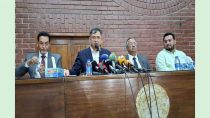
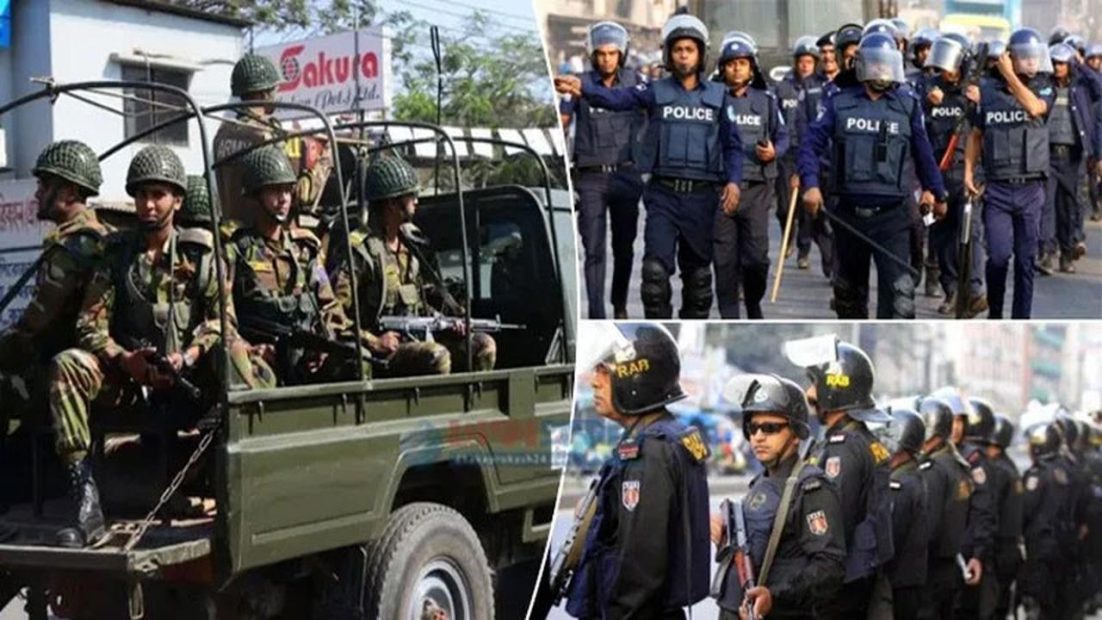
On Tuesday, Prime Minister’s Information Adviser Dr. Zahed Ur Rahman said at a press conference at the Secretariat that joint forces could be deployed to maintain law and order if necessary. He said the police were increasing their activities but that joint forces could be deployed if required.
On September 24, criminals reportedly attacked, vandalised and looted the office of “RADDA,” a renowned private charitable healthcare centre in Mirpur with a 50-year history. The facility, which provides healthcare to underprivileged mothers and children, was reportedly demolished for hours using an excavator, while local police allegedly remained inactive.
Residents alleged that local influential groups affiliated with the ruling BNP and a female BNP lawmaker from a reserved seat provided political patronage to the attackers, preventing police from taking legal action. Nagorik Oikya leader Mahmudur Rahman Manna said on Tuesday that even during the Pakistan period, such an incident had not occurred at a hospital.
Another incident subsequently occurred in the Cantonment area of the capital, where the studio of content creator Salman Muqtadir was attacked and vandalised. Following the incident, which reportedly stemmed from a land dispute, Mr. Salman expressed anger in a Facebook video, accusing BNP and its affiliated organisations’ leaders of extortion and blaming the government for failing to ensure security. Home Minister Salahuddin Ahmed dismissed the allegations as sweeping claims. Mr. Salman later said that nobody had demanded extortion money from him.
Incidents involving attempts to seize a house in Adabar and land in Mohammadpur have also come to light. Amid such incidents, a social media campaign has reportedly emerged accusing the BNP of extortion, prompting criticism of the government. Public discussion has also grown over allegations that criminals are becoming emboldened by political backing or influence from powerful quarters.
The government has defended itself, while BNP leaders and activists have taken to Facebook to deny involvement. However, a Dhaka Metropolitan Police (DMP) list has reportedly identified a large number of people allegedly involved in extortion and land grabbing.
After more than one and a half years of investigation in police station areas across the capital, the DMP identified 1,536 alleged criminals involved in land grabbing, footpath occupation and extortion. Of them, 1,252 were identified as active extortionists, while 278 were identified as key patrons, or “godfathers,” of the syndicate.
According to the report by DMP Police, 230 of the 278 alleged patrons are BNP and affiliated-organisation leaders and activists. At least 350 of the 1,252 active extortionists reportedly hold positions in the BNP, Jubo Dal, Chhatra Dal or Swechchhasebak Dal. Many of the remaining alleged criminals reportedly maintain influence by claiming close ties with ruling-party leaders.
Recent DMP data indicate that an extortion network once controlled by the now-banned Awami League and its affiliated organisations has allegedly shifted to current and former leaders and activists of the ruling BNP and its affiliated organisations. Political analysts say the government’s alleged failure to curb extortion and land grabbing could negatively affect the BNP in the upcoming Union Parishad elections.
According to DMP figures, footpaths and makeshift markets are major sources of income for extortion networks. Around Tk 4.2 million is reportedly collected every month from the footpath between Mirpur-10 and Mirpur-2 alone. Of this, around Tk 800,000 reportedly comes from several hundred shops in and around Hopes Lane. In the Vatara area, Tk 1.2 million to Tk 1.5 million is reportedly collected monthly from small shops and street vendors between Natun Bazar and Madani Avenue.
Police investigators have said that before the political change on August 5, 2024, billions of taka in extortion money from these sectors allegedly went to the then-ruling Awami League. Following the government’s fall, control of the money flow reportedly shifted to BNP leaders and activists.
Amid mounting criticism, the government has claimed that it has adopted a “zero tolerance” policy against criminals. Home Minister Salahuddin Ahmed said political identity or party position would not be considered and that law enforcement agencies had been instructed to work independently.
IGP Md Ali Hossain Fakir also said on Tuesday, “There is no scope to consider a criminal’s political identity. A criminal’s only identity is that he is a criminal. Instructions have been given to bring terrorists and extortionists strictly under the law.”
The prime minister’s information adviser’s statement that joint forces could be deployed if necessary has now added to expectations that stronger action may be taken to restore law and order.