Masoud Pezeshkian: Now Is the Right Time to End War While Tehran Holds Strong Position
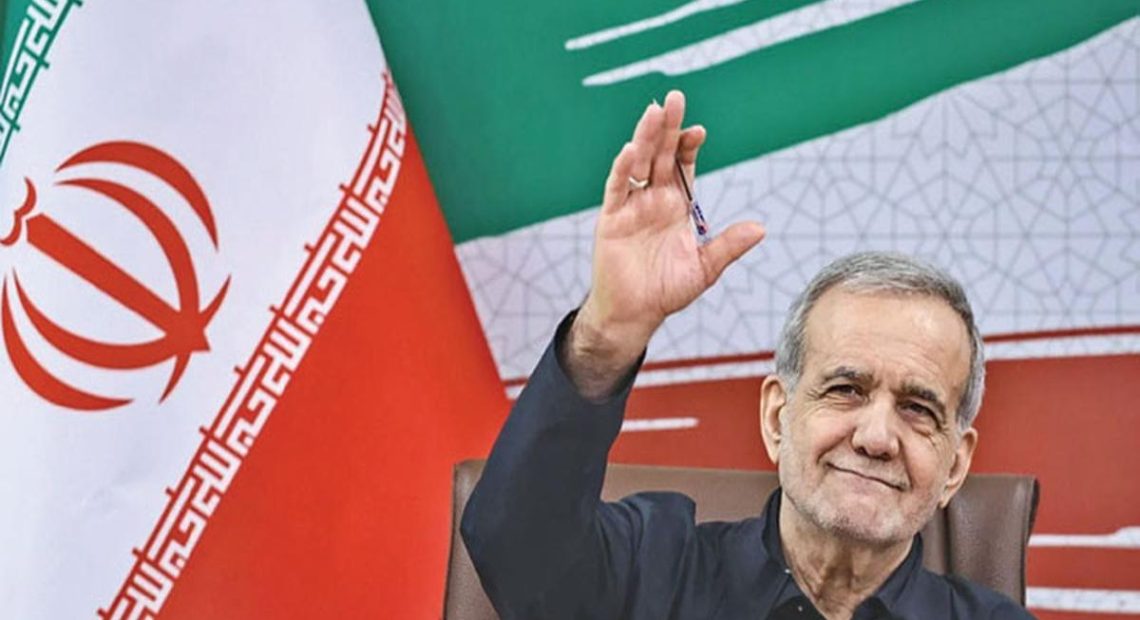
Iranian President Masoud Pezeshkian has said that now is the right time to end the war with the United States, arguing that Tehran is currently in a stronger position than Washington. The remarks came as Iran maintains a partial blockade of the Strait of Hormuz following the US-Israeli war against Iran that began in February, while Washington continues its naval blockade. The conflict has reached a stalemate, with negotiations between the two sides currently suspended.
Speaking on Friday, Mr. Pezeshkian said, “It is better to end the war now, as we are in a position of strength and dignity.” He claimed that the world was recognising Iran’s victory and accusing the United States of violating international rules by attacking Iranian schools, hospitals and infrastructure. Mr. Pezeshkian also rejected any suggestion that the memorandum of understanding signed with the United States in June represented an Iranian defeat. “They will not find a single clause in this agreement that indicates surrender. All commitments apply to the other side as well,” he said.
Meanwhile, as the war approaches its sixth month, US Treasury Secretary Scott Bessent has recently pledged to bring down the Iranian government through sanctions. US media reports have also said that the US Navy is organising and providing security for a fleet of oil tankers through the southern route, allowing between 5 million and 10 million barrels of oil to be exported daily. Tehran’s claim of being in a strong position comes as Washington has announced further sanctions against Iran. Iran’s Foreign Ministry described the sanctions as “economic terrorism” and said those responsible should face justice and punishment.
China has also criticised Washington’s decision. Chinese Foreign Ministry spokesman Lin Jian said sanctions and pressure would not help resolve the problem. He urged all parties to act responsibly and seek a political and diplomatic solution. Chinese President Xi Jinping is reportedly scheduled to visit the White House on September 24, with Iran expected to be a major topic of discussion. Iranian Foreign Minister Abbas Araghchi described the US economic pressure on Iran as an attempt to divert attention from America’s domestic problems, pointing to what he called the country’s “unprecedented debt and rapidly growing interest burden.”
The United States has also imposed sanctions on Hezbollah alongside Iran. In response, the group said that “unjust sanctions and designations” would not prevent it from continuing its resistance against Israel. Hezbollah, backed by Iran, has launched rocket attacks on Israel. Meanwhile, Washington is seeking to mediate talks between Israel and Lebanon amid the continuing tensions.