No Space to Bury the Dead: Families in Gaza Face New Humanitarian Crisis
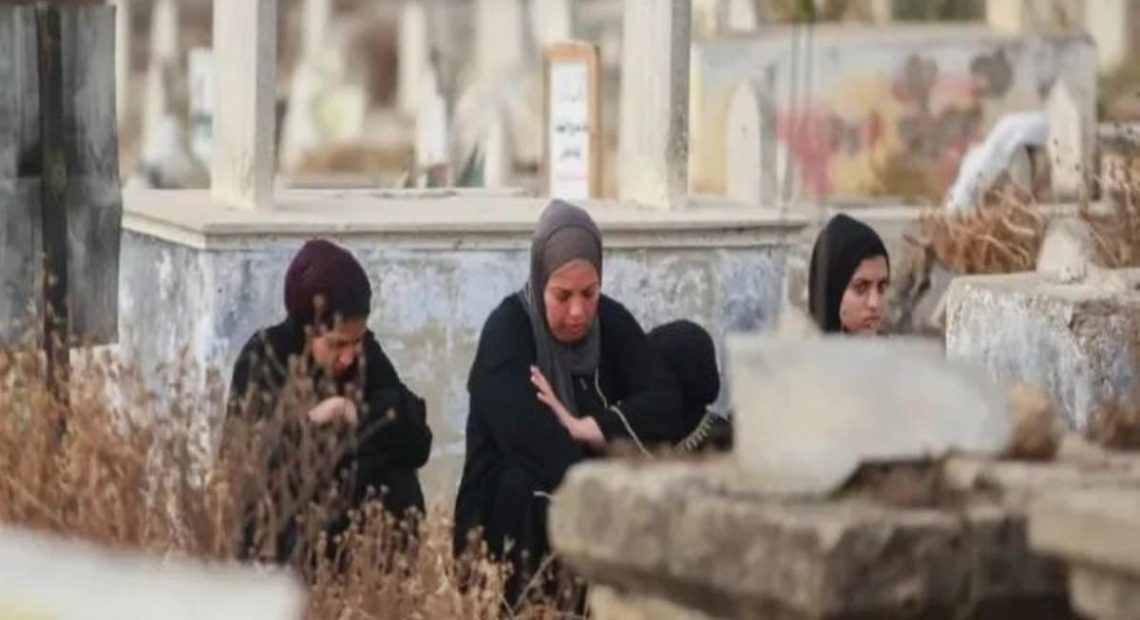
In the Gaza Strip, which has been reduced to rubble by Israeli attacks, burying the dead has become a new humanitarian crisis. Even when families manage to recover the bodies of loved ones from the rubble or temporary locations, grieving relatives are struggling to find even a small piece of land to give them a final resting place.
An Al Jazeera report highlights the severe shortage of burial space in Gaza’s cemeteries.
The report tells the story of 20-year-old Omar al-Sawhi. His 40-year-old father, Mohammed, was killed by Israeli gunfire in June while selling tea and coffee in a military zone. When Omar went to bury his father, he found no vacant space at the Zeitoun cemetery. With the cemetery overcrowded and burial plots scarce, he was forced to bury his father over his grandfather’s old grave.
“I stood in the middle of the cemetery and saw nothing but mountains of graves and sand,” Mr. Omar said. He added that many graves are being temporarily marked with only a stone bearing the deceased’s name, without enough cement or bricks for proper construction. The cost of a single burial plot ranges from 500 to 1,000 shekels; approximately $235 to $335; which is unaffordable for most families under the current circumstances. According to Gaza’s Ministry of Religious Affairs, more than 73,000 Palestinians have been killed in the war that began in October 2023. At least 40 cemeteries have also been destroyed by Israeli airstrikes, leaving the remaining burial grounds completely overcrowded.
Because of the war, thousands of people have been buried in mass graves, hospital courtyards, school grounds and around temporary displacement camps. As conditions have eased somewhat following a temporary ceasefire, families have begun trying to recover the remains of their loved ones and transfer them to permanent cemeteries. However, the shortage of burial space and construction materials has made it difficult to build proper graves. Fifty-year-old Tafesh Abu Hatab, who has worked as a gravedigger at Khan Younis Cemetery for 19 years, described the scale of the tragedy. “I have never seen such bloodshed in my career,” he said. Before the war, the cemetery had only around 60 graves. Now, at least 6,000 bodies have been buried there. At one point, he had to dig an average of 35 graves every day. He added that Israeli bombing has reduced homes to rubble, and the bricks and stones recovered from the ruins are now being used to construct new graves.
Ikrami al-Madallal, an official with Gaza’s Waqf and Religious Affairs Ministry, confirmed that the existing crisis has made it urgent to identify new burial grounds. However, fuel shortages, widespread infrastructure destruction and the threat of renewed Israeli attacks have made establishing new cemeteries and safely transferring bodies extremely difficult.
Source: Al Jazeera