Mecca Pact: A Far-Sighted and Timely Decision
Rintu Anwar>
The world is now going through a period of major geopolitical change. The unipolar world order that emerged after the Cold War is largely a thing of the past. In its place, a complex and changing multipolar world is taking shape. A major transformation is particularly underway in the political and strategic landscape of the Middle East. The recently signed “Mecca Joint Defence Pact,” or “Mecca Pact,” is the clearest example of this change.
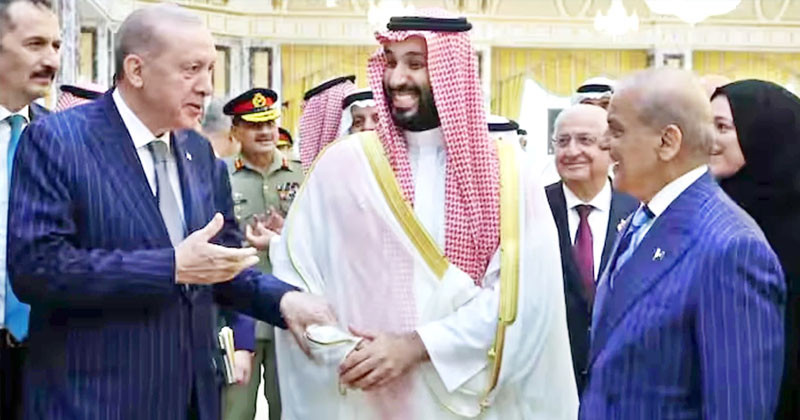
Signed in the holy city of Mecca by three influential Muslim-majority countries—Saudi Arabia, Türkiye and Pakistan—the agreement is not merely an ordinary military understanding. Rather, it represents a new architecture of regional and global security.
The most important and relevant discussion now centres on the possible expansion of this alliance and Bangladesh’s potential membership. There is strong debate in various circles over how logical it would be for Bangladesh to join the alliance and what geopolitical benefits and risks it could bring.
For a long time, the United States held the key to security in the Middle East. However, in recent years, changes in US policy, domestic politics and its growing focus on the Asia-Pacific region have gradually reduced its traditional “security umbrella” in the Middle East.
The Israel-Palestine conflict, the visible failure of the Abraham Accords and the growing influence of Iran have made Middle Eastern countries realise that they can no longer blindly depend on foreign superpowers to ensure their survival and security. The Mecca Pact has emerged from this realisation.
The strength of the pact can be understood by looking at its three founding members.
Saudi Arabia has enormous energy resources and economic influence. Türkiye brings the experience of having NATO’s second-largest army, along with advanced military technologies, particularly drones and cyber warfare capabilities. Pakistan has a large and disciplined military and the Muslim world’s only nuclear arsenal.
Together, these three countries have created a huge military bloc with around 1.4 million active-duty personnel, thousands of fighter aircraft and tanks. The most groundbreaking aspect of the pact is its “collective defence” principle. This means that an attack on any one member of the alliance will be considered an attack on all members. In this sense, it is an innovative Muslim version of NATO’s famous Article 5.
Bangladesh’s official position on joining the Mecca alliance has so far been highly positive. Statements from the highest levels of the government indicate that the alliance is being viewed as a constructive platform for self-defence.
Analysing the recent statements of the Foreign Minister and State Minister for Foreign Affairs shows that Bangladesh does not want to remain a silent observer. Because of its long experience in peacekeeping missions and its military discipline, Bangladesh is also considered a reliable partner in the international arena.
The most encouraging aspect is the unprecedented political consensus within the country on this issue. The government, opposition parties and the general public are all positive about the alliance.
Such unity is truly rare in a politically divided culture. In particular, continuous geopolitical pressure and what many perceive as hegemonic behaviour from a neighbouring country have created a strong desire among ordinary Bangladeshis to become part of such a powerful alliance. This is largely an expression of psychological and strategic dependence.
If Bangladesh formally joins the alliance, the country could gain significantly in military, diplomatic and economic terms.
First, defence and military capabilities would increase. Direct cooperation with a militarily and technologically advanced country such as Türkiye could take Bangladesh’s armed forces several steps forward in modernisation. Bangladesh could potentially obtain advanced drones, sensors, artificial intelligence (AI)-based weapons systems and electronic warfare technologies from Türkiye on highly favourable terms.
Joint training and the exchange of strategic knowledge with Pakistan’s armed forces could further strengthen the professionalism of Bangladesh’s military. In addition, the exchange of high-level military intelligence among member states could make Bangladesh’s internal and border security more secure.
Second, economic and energy security could be strengthened. Saudi Arabia would not only be a military ally but could also become a major source of economic support for Bangladesh. As a member of the alliance, Bangladesh could receive priority in Saudi Arabia’s energy policies, which could play a long-term role in addressing the country’s current gas and oil shortages.
Global companies such as Saudi Aramco could make major investments in Bangladesh’s oil refineries or energy infrastructure. At the same time, Bangladesh’s large labour market could receive greater opportunities in Saudi Arabia’s Vision 2030 mega projects, giving new momentum to remittance flows. There could also be significant opportunities for duty-free trade with Türkiye and for expanding Bangladesh’s garment exports.
Third, it could strengthen strategic autonomy and create a deterrent framework. Bangladesh is geographically located in a position where three sides of the country are surrounded by a large and powerful neighbouring state. At various times in the past, diplomatic pressure or indirect threats from this neighbouring country have created discomfort for Bangladesh’s policymakers.
By joining the Mecca Pact, Bangladesh would enter an “extended security umbrella.” As a result, any country considering military or diplomatic aggression against Bangladesh would have to think at least twice because of the combined strength of the alliance.
This would provide significant psychological strength for Bangladesh to formulate an independent foreign policy. According to international relations experts and political analysts, Bangladesh should join the Mecca Defence Alliance. However, the decision must be extremely well considered, conditional and based entirely on protecting the country’s national interests.
The arguments in favour of joining are strong. In the multipolar world of the 21st century, remaining “non-aligned” does not mean isolating or weakening oneself completely. Bangladesh has not been part of any military alliance for decades. As a result, we have often been seen as a kind of “soft target” or vulnerable country in regional geopolitics.
Although India is a friendly country, the security of a sovereign state can never be left entirely dependent on the goodwill of a neighbouring country. The balance of power is a constant reality in international relations. Bangladesh’s inclusion in the Mecca alliance could create precisely such a balance.
There is also a practical solution to concerns about being drawn into wars. A military alliance does not necessarily mean blindly joining another country’s war. Saudi Arabia and Pakistan themselves provide an important example. Even though the two countries had such a defence agreement in 2015, Pakistan did not directly send troops to fight in the Yemen war or during periods of tension with Iran. Every agreement can include a provision allowing members to make their own sovereign decisions, often referred to as an “escape clause.”
Bangladesh could also attach clear conditions when joining the alliance, stating that the pact would be strictly “defensive.” Bangladesh’s armed forces would participate militarily only when a member state is directly attacked by an external enemy and such action does not conflict with the UN Charter.
Bangladesh could contribute in areas such as logistics, technology, cybersecurity and training. This would be less risky than directly sending troops while still being effective. Moreover, major global powers—particularly China and Russia—are also viewing the rise of this alliance positively because it could reduce US dominance. The Mr. Trump administration also wants regional powers to take greater responsibility for their own security. At a time of such global political alignment, becoming a partner in this alliance could offer Bangladesh an unprecedented strategic opportunity.
Finally, to survive, a country must first develop the ability to protect itself. The Mecca Pact could become a historic platform for Bangladesh to develop such capabilities. It is not merely an agreement. It could be a quiet declaration that Bangladesh intends to stand tall in the world as a self-respecting and strong-willed state.
We should not allow unnecessary fear or a policy of pleasing others to make us miss this golden opportunity. By protecting our interests through the highest level of wisdom and negotiation at the diplomatic table, Bangladesh’s inclusion in the Mecca Defence Alliance would be one of the most far-sighted and timely decisions for the country in the 21st century.
Author: Journalist and columnist.
rintuanowar.com