Return Announcement or Political Comeback Manoeuvre?
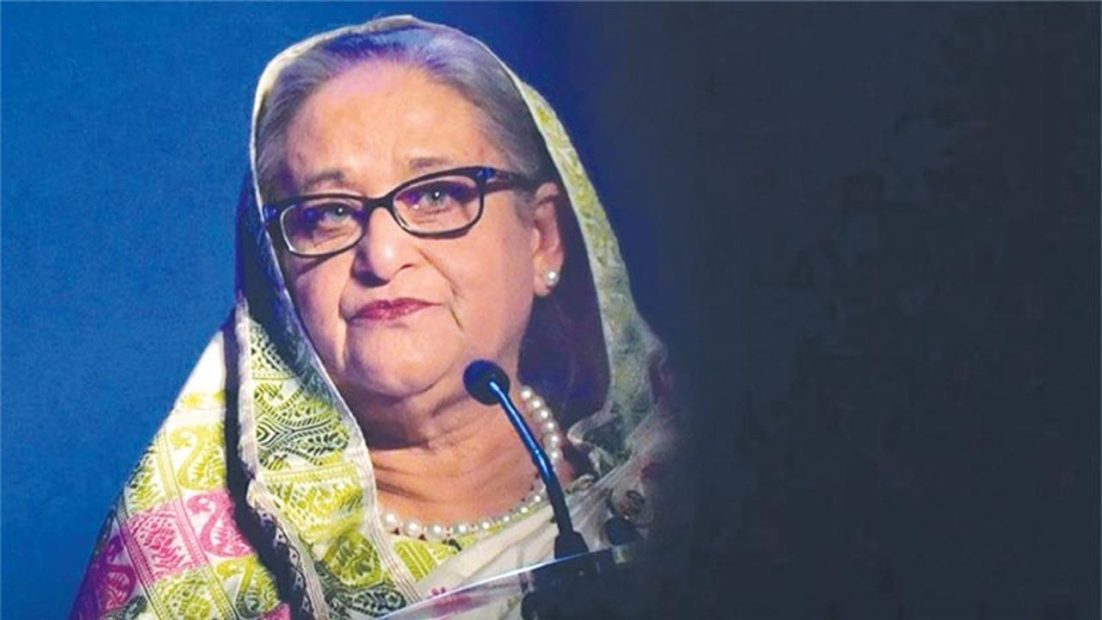
Sheikh Hasina has announced that she intends to return to Bangladesh. On November 9, 2026, her lawyers in London reportedly contacted Bangladesh’s diplomatic mission in New Delhi, seeking new passports and national identity cards for her. In an interview with Reuters, she said she wanted to return home in December and surrender to the court. Her associates have also said that a return date would be announced once the necessary formalities were completed. This suggests that the announcement is not merely a rumour circulating on social media; reports indicate that her representatives have also taken administrative steps towards her return.
However, the situation following the announcement is complicated. On November 17, 2025, the International Crimes Tribunal sentenced Sheikh Hasina to death in absentia over the crackdown during July and August 2024. She has rejected the verdict and questioned the legitimacy of the trial process. The Bangladesh government has rejected her applications for a passport and national identity card, while ministers have said that her return should take place through the extradition treaty. Bangladesh’s extradition request to India also remains unresolved.
How much of Ms. Hasina’s announcement is a genuine plan to return, how much is a political signal, and how much is an attempt to create a new political market around her possible comeback? To answer this question, it is important to understand one thing first: Sheikh Hasina’s return to Bangladesh, the political comeback of the Awami League, and the revival of the political and economic networks built during her rule are not the same thing. One may happen without the other two. Similarly, even if a leader does not return home, their party or political network may try to reorganise itself under new circumstances.
There are three levels of political return.
The first is the return of the individual. If Sheikh Hasina returns to Bangladesh, she will have to face the existing legal process. The verdict against her, other cases, surrender, trial and extradition issues are all part of this process. Her personal decision will also depend on Bangladesh’s legal position, India’s stance and diplomatic relations between the two countries.
The second is the return of the party. Sheikh Hasina’s return alone would not automatically restore the Awami League’s political legitimacy. The party’s activities were banned in May 2025, and the Election Commission suspended its registration on May 11. It could not participate in the national election held in February 2026. On April 8 of the same year, Parliament passed a law to maintain the ban.
The United Kingdom’s October 2026 report on Bangladesh also confirmed that the party’s activities remained banned and its opportunities to participate in formal political activities were restricted. However, the party still has members, supporters and a political identity. A ban does not mean that its social existence has disappeared.
The third level is the return of the political and economic network. This is the most complicated and perhaps the most important aspect. The power of a political party is not limited to its president, general secretary or members of parliament. It also involves local leaders, student and youth organisations, professional groups, business connections, contractors, administrative contacts and various intermediaries. These relationships do not disappear overnight when a party loses state power. Some become inactive, some break apart, while others develop new arrangements with different political groups.
Therefore, understanding the political economy of a possible comeback requires more than knowing when Sheikh Hasina might return. It is also necessary to examine what happened to the old networks after the loss of power and how they are trying to reposition themselves in the new political environment.
Patronage-based politics and political networks
The concept of patronage-based politics, or clientelism, is important here. In simple terms, it refers to an exchange relationship between political power and loyalty. Political leaders or powerful groups influence the distribution of resources such as jobs, business opportunities, government benefits, contracts, security and administrative support. In return, they receive political support, organised manpower, election campaign assistance, participation in rallies and meetings, and help in maintaining local influence.
These relationships do not always involve direct bribery or financial transactions. In many cases, they are based on personal loyalty, mutual dependence and calculations of local power. The central leadership of a political party often runs its organisation through influential local figures. At the same time, local leaders use their connections with the central leadership to maintain their influence and control over resources in their respective areas.
In their 2019 research on local politics in Bangladesh, David Lewis and Abul Hossain showed how ruling parties can expand their control at the local level through interactions between formal state institutions and informal political practices. They identified methods such as bypassing institutions, capturing local institutions, using intermediaries and creating new organisations.
Similarly, Adiba Aziz Khan’s 2020 research highlighted the power of mid-level leaders and the role of patronage in party nominations and political organisation in Bangladesh. These studies show that a party’s power does not depend solely on the popularity of its central leadership or its election results. Much of its strength also depends on how firmly it maintains relationships involving resources, organisation and political loyalty at the local level.
The way these relationships operated during the Awami League’s long period in power requires separate analysis. However, the immediate issue is understanding their possible continuity after the party lost power. The UK Home Office’s October 2026 country report on Bangladesh stated that student, youth, labour and professional organisations linked to major political parties are important channels for mobilising political manpower. Although these organisations maintain links with their respective party leaderships, they also exercise their own influence at the local level.
The report also found that some former Awami League leaders and activists had reached understandings with other political parties, while some had left their local areas and others had maintained their positions at the local level.
This does not mean that the Awami League’s old organisational structure has secretly remained intact or that a coordinated comeback plan is being implemented under central instructions. Rather, it suggests that local relationships built through political power can survive even when party identities change.
This raises the central political and economic question surrounding the possible comeback: Will the old networks return if Sheikh Hasina comes back? And even if she does not return, will some parts of those networks be able to regain influence under new political identities?
The political significance of Ms. Hasina’s return announcement
Ms. Hasina’s announcement has created a political message for her supporters. For activists and supporters of a party that has remained out of power for a long time, a commitment by its leader to return home can help maintain organisational morale. It may convince them that the leadership has not abandoned the political struggle and that the party’s future has not been completely removed from political discussion.
The announcement could also bring the government’s political and diplomatic position back into the spotlight. Does the government want to prevent Hasina from returning, or does it want to bring her back through extradition? Will she be issued identity documents? What will India do? What are the next steps in the legal proceedings? These questions have once again come to the forefront.
As a result, discussions about her possible return could occupy a significant part of political activities and media attention.
Third, the announcement has created a new issue in international discussions. Hasina’s side is raising the issue of her citizenship rights and her right to return home. On the other hand, the Bangladesh government is referring to the verdict against her and the extradition treaty as the basis for bringing her back.
Consequently, the issue is no longer limited to Hasina’s personal wishes. It has also become part of discussions on Bangladesh-India relations, justice and political inclusion. All three developments could have political value. However, there is no basis for treating them as the confirmed intentions behind Hasina’s announcement. The objectives of a political announcement and its actual political consequences are two different matters.
The term ‘return market’ refers here to an exchange involving political attention, loyalty, bargaining power, international acceptance and future political opportunities. Some parties may benefit from these discussions, while others may come under pressure. Even if an actual return does not take place, the possibility of a comeback can itself be used as a political resource.
What comparative political research tells us
Research in comparative politics offers an important observation about the future of political leaders living in exile. In a 2022 study, Masanori Kubota, Kaoru Hidaka and Taku Yukawa created a database of political leaders in exile. Their findings showed that the political futures of such leaders vary widely. Some manage to return home, others remain in exile for years, while some lose their political influence or see it change in different ways.
Exile alone does not determine the final outcome of a leader’s political career. This research does not predict Sheikh Hasina’s future. Rather, it cautions against two incorrect assumptions. A leader or party does not necessarily become politically irrelevant simply because they are living abroad. At the same time, returning home does not guarantee the restoration of political influence.
The Awami League’s current position also helps explain this distinction. The party could not participate in the election, has no representation in Parliament and faces restrictions on its formal political activities. However, its supporters and former activists remain present in different parts of the country.
Some have become politically inactive, some have reached understandings with other parties, while others are making statements online from abroad. There have also been reports of political activities in some areas in defiance of the ban.
The UK’s country report highlights this diversity. It refers to many lower-level supporters who were not involved in corruption, violence or repression and who continue to live in their local communities. The same report also mentions the risk of social harassment and violence faced by people who openly express support for the Awami League. This means that the organisational ban on the party, the prosecution of individuals for specific crimes and the political rights of ordinary supporters are three separate issues.
Political accountability versus political revenge
Bangladesh’s current political forces also face a test over these issues. During the Awami League’s rule, there were allegations of harassment, cases, arrests and repression of political opponents based on their political identities. Following the change of power, cases and arrests have been initiated against people linked to the Awami League, while political restrictions have also been imposed on the party.
Those facing specific allegations and evidence of criminal activities should be brought to justice. However, treating someone as a criminal solely because of their party identity or past political involvement is inconsistent with the rule of law. The distinction between political accountability and political revenge must be maintained.
If a former minister, police officer or party leader faces allegations of human rights violations, corruption or murder, their individual responsibility and relevant organisational involvement must be investigated. However, an ordinary party worker or supporter cannot automatically be considered an accomplice to the same crimes.
Similarly, the government may have reasons for maintaining the ban on the Awami League’s political activities. However, the legal basis, duration and proportionality of the ban, as well as its relationship with the judicial process, must be reviewed regularly. Whichever party adopts the practice of excluding political opponents, the eventual outcome could be a repetition of the politics of the past.
The same question therefore applies to those currently in power: Are they creating a political system in which rival parties can compete under the law, or are they using the advantages of state power to permanently exclude their opponents?
Three separate questions of political return
Sheikh Hasina’s possible return to Bangladesh must therefore be examined at three different levels. Whether she will return as an individual depends on her decision, her legal status and the diplomatic process between India and Bangladesh.
Whether the Awami League will return to mainstream politics depends on its legal position, changes in its leadership, accountability for past crimes and its acceptance within democratic politics. Whether the old patronage networks will return depends on how far the rules governing the distribution of state resources and political power have changed.
For any party’s return to be democratic, it must address responsibility for past human rights violations and abuse of power, abandon political violence, ensure transparency in party leadership and financing, and respect the rules of free and fair electoral competition. At the same time, the state must ensure fair judicial proceedings, citizens’ rights and freedom of political expression.
Author: Associate Professor, Shaheed Buddhijibi Government College, Rajshahi
Email: hhafij@yahoo.com