Threats to Invade Bangladesh: Media and Intellectuals Have Mortgaged Their Conscience to India
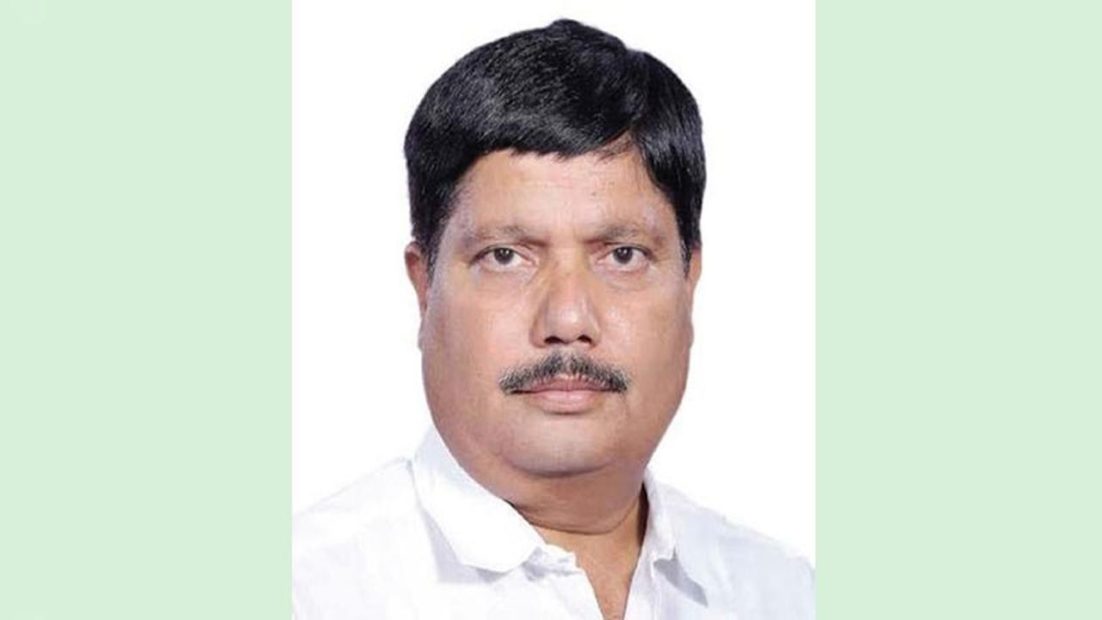
The rural proverb “the twig is bigger than the bamboo” suddenly came to mind after hearing the threat made by Arjun Singh, West Bengal’s Transport Minister. This BJP junior leader from West Bengal has threatened to take over Bangladesh by December 16. China has occupied parts of India’s Arunachal Pradesh and Ladakh. India’s ruling BJP has not been able to show the courage to speak out against China. Yet, it is displaying arrogance towards Bangladesh.
Arjun Singh said, “We will take Bangladesh by December 16. Bangladesh can no longer be spared. We must avenge the way Hindus have been exterminated there.” Meanwhile, the Narendra Modi government in India is making every possible effort to rebuild friendship with Bangladesh. Dinesh Trivedi, the High Commissioner working in Dhaka, has held meetings with around 50 influential individuals, including 30 ministers and state ministers, in Bangladesh over the past few months since assuming office. He has travelled to Delhi in the evening after holding meetings in Dhaka in the afternoon, delivered messages from Dhaka to Modi and returned to Dhaka the following morning.
Dinesh Trivedi is working tirelessly, travelling between Dhaka and Delhi, to take Prime Minister Tarique Rahman to Delhi on a visit. At such a time, the arrogant remarks made by a minister of a state government, Arjun Singh, sound like the proverb “the twig is bigger than the bamboo.” However, those in Bangladesh who think about the country day and night, believe in its independence and sovereignty, and have even the slightest sense of self-respect as distinguished citizens cannot tolerate such remarks by Arjun Singh in any way. Yet, Bangladesh’s civil society, intellectual circles, cultural figures and even leaders of political parties seem to be asleep. There has been little protest in the media. They appear to have sealed their lips.
No one knows whether Sheikh Hasina is alive or dead. No one has seen her publicly in the past two and a half years. Statements circulated on social media are allegedly hers, but no one knows whether they are genuinely her words or generated using artificial intelligence (AI). This is because many content creators who hate Sheikh Hasina have released AI-generated videos of her on social media. These videos show Hasina crossing border fences through jungles, returning to the country on a raft across rivers or crossing the border through tunnels. Watching such videos, ordinary people like us cannot even determine whether they are real or AI-generated. Her statements about returning to the country have stirred considerable controversy. Discussions are raging on television talk shows, YouTube and social media about the route she might take to enter Bangladesh. Extensive articles and reports are being published in television, online media and newspapers. The media have been losing sleep over reports that fugitive Awami League leaders Nanak and Nasim are holding meetings near the border to reconnoitre the route for Hasina’s return to Bangladesh. Yet, the arrogant remarks made by a minister of an Indian state government are being silently tolerated. What would the reactions of the currently dormant intellectuals, civil society members and senior journalists in the media have been if a minister from Pakistan, China, Myanmar or even Nepal had made such an arrogant statement about taking over Bangladesh?
After the end of colonial rule in 1947, India occupied five sovereign countries. Jammu and Kashmir in 1947, Junagadh in 1948, Hyderabad in 1948, Goa, Daman and Diu in 1961, Pondicherry in 1962 and, finally, Sikkim in 1975. In the 1970s, when Indira Gandhi moved forward with a plan to annex Sikkim through Lhendup Dorji, statements advocating the annexation of Sikkim were initially promoted through junior and subordinate leaders in neighbouring states. At that time, intellectuals in Sikkim remained silent, and some were reportedly bought off with money from Delhi. This made Sikkim’s annexation easier for Indira Gandhi. Following the regime change during the 1/11 period in 2007, allegedly jointly orchestrated by the United States and India, the Congress government under Dr Manmohan Singh also installed Sheikh Hasina in power in Dhaka as a “puppet”. Although BNP leaders in Dhaka celebrated with sweets when the BJP came to power in the 2014 election, Narendra Modi, after becoming Prime Minister, supported Sheikh Hasina in accordance with India’s longstanding blueprint. When the student-led mass uprising ousted the Awami League from power in 2024, Sheikh Hasina fled to India. Although the mass uprising drove Hasina out of the country, India’s conspiracies concerning Bangladesh have not stopped. Delhi’s think tanks are continuing one conspiracy after another. Arjun Singh’s arrogant threat to take over Bangladesh is part of that continuation. Earlier, on March 29 this year, West Bengal BJP president Shamik Bhattacharya announced plans to incorporate Bangladesh’s Khulna and Jessore regions into India. On November 22, Shamik Bhattacharya called for protests over alleged persecution of Hindus in Bangladesh and claimed that Bangladesh was formed on the basis of religion rather than language and that the country belonged to them. On September 7, 2024, India’s Home Minister Amit Shah threatened to hang alleged Bangladeshi infiltrators if the BJP formed a government in Jharkhand. On December 6 of the same year, local police filed a case against K S Eshwarappa, former Deputy Chief Minister of Karnataka and expelled BJP leader, over provocative remarks against Bangladesh. West Bengal Chief Minister Suvendu Adhikari and Assam Chief Minister Himanta Biswa Sarma have repeatedly made anti-Bangladesh remarks and faced condemnation in their own country. Yet, Bangladesh’s civil society and intellectuals remain silent. The arrogant statements by BJP leaders in India threatening to take over Bangladesh seem to have gone unnoticed by them.
Indians may not understand the essence of independence in the same way as the people of Bangladesh. The British partitioned the subcontinent in 1947, creating separate territories within India. Bangladesh, however, achieved independence in 1971 after fighting a nine-month war. Therefore, the sovereignty consciousness of Bangladeshis and that of Indians should not be expected to be the same. But why are the intellectuals, media professionals and leaders of certain political parties, who constantly lecture the country and its people, silent about the threat to “take over Bangladesh”? A minister from West Bengal and a third-tier BJP leader made an arrogant statement threatening to take over Bangladesh, yet Dhaka’s media are not even giving it importance. The false Reuters report claiming “Hasina is returning to the country on December 16” has triggered widespread commotion in television talk shows and the media. The threat by a BJP leader to take over the country is receiving not even a quarter of that attention. The so-called intellectuals seem to be hiding their heads in the sand like ostriches. Those who wave the flag of patriotism and become vocal in protest at the slightest perceived offence involving Pakistan or China, and sing songs of defending the country, are not being stirred by a junior BJP leader’s threat to take over Bangladesh.
Literary writer Ahmed Sofa wrote in 1972, “If we had listened to what intellectuals said, Bangladesh would not have become independent. If we listen to what they are saying now, the social structure of Bangladesh will not undergo a radical transformation.” Even after half a century, his statement is proving its relevance. Unpleasant as it may be, the truth is that Sheikh Hasina fled to India following the student-led uprising. The thinking, outlook and news sources of most Bangladeshi media outlets appear to have become increasingly dependent on India alongside Hasina. News about India and the affairs of Modi’s government are receiving more attention in Bangladesh’s media than events in Bangladesh and the interests of its people. Indian citizens have nicknamed their country’s media “godi media”. Millions of people in India believe that their country’s media publish whatever Narendra Modi wants them to. Indian readers and citizens do not particularly trust their country’s media. Yet, when a newspaper in India publishes news provided by Delhi’s South Block, that news creates a huge stir in Dhaka’s media.
When Sheikh Hasina governed Bangladesh, the reins of power were allegedly in the hands of Delhi’s South Block. Party nominations in elections, who would occupy positions within the ruling party, who would receive promotions in the civil and military administrations and who would be appointed to important positions were allegedly decided in Delhi. During the farcical election of 2024, several rebel Awami League candidates arrogantly claimed, “We are Delhi’s nominated candidates; no one can defeat us.” It seems that the reins of much of Bangladesh’s media were also in Delhi’s hands under Hasina. News publication, news prioritisation and everything else appear to have been influenced by the media of the neighbouring country. Yet, India’s own citizens distrust their media and mockingly call them “godi media”.
Take the chaos in Gopalganj, for example. A few days ago, a rampage was carried out there in the name of a blockade. A police station was set on fire. MPs’ residences were torched. Government installations were set ablaze. All the media outlets in the country highlighted these incidents. The movement and blockade were extensively covered. Reports were presented in such a way that it appeared that control of the small district of Gopalganj had fallen into the hands of Awami League supporters. Media reports suggested that the government had become so helpless that it was considering dividing Gopalganj. Fewer than 10 per cent of the district’s total population were involved in the terrorist activities. The innocent ordinary people of the district did not participate in the arson and destruction. However, due to the blockade, goods could not enter Gopalganj from neighbouring districts for several days. As a result of shortages and increased demand, diesel was sold at more than Tk 200 per litre. A cigarette that costs Tk 20 per stick in Dhaka had to be bought by consumers in Gopalganj for Tk 40 to Tk 50. Vegetables that cost Tk 80 per kilogram in Dhaka had to be purchased for Tk 150, forcing ordinary people to struggle to run their households. Yet, no media outlet reported on the extreme hardship faced by ordinary people in Gopalganj due to the blockade by a few individuals over the Hasina-return issue, the arson at the police station and the resulting chaos.
It is essential for the media to present accurate and impartial information, protect public interests and ensure accountability in the state and society. However, during the Gopalganj blockade, we saw most media outlets attempting to create disorder in the country by spreading rumours and misinformation. They were sending “fake messages” to foreigners. During garment workers’ protests, intelligence agencies reportedly supplied information that members of the banned Chhatra League, Jubo League and Krishak League were infiltrating genuine workers and spreading terror. Yet, no media outlet attempted to expose those Awami League terrorists by unmasking them and distinguishing them from genuine workers. And the intellectuals, meanwhile, are simply passing their time asleep. What kind of patriotism is this?