Service Bridges Open on Dhaka-Ashulia Expressway, Ending Traffic Jams

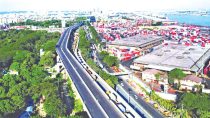
The official opening of two recently built service bridges on the Dhaka-Ashulia Expressway has significantly improved the transportation network that links Dhaka with Savar, Ashulia, and Dhamrai. In the past, travelers sometimes had to spend one to two hours only to go a few kilometers due to the severe, chronic traffic jams along this crucial industrial route. Drivers of cargo vehicles carrying raw materials and completed items suffered greatly, and homeowners, students, and industrial workers were forced to leave their homes hours earlier than planned due to this terrible backlog.
Two two-lane service bridges that span 3.71 kilometers from the Dhour junction to Ashulia are part of the recently built infrastructure. Mr. Shafiqul Islam, the project director, claims that these bridges have been made available for traffic to make upcoming work on the main elevated highway structure easier. These service bridges are currently the major crossing because the road from Ashulia to Dhour is not being kept open to preserve regular water flow in the Turag River, and the current road below it will soon be closed.
Tolls will only be collected on the four center lanes of the finished expressway, according to project authorities, so commuters using the recently opened lane may cross the Turag River entirely toll-free. For thousands of walkers, private vehicle owners, motorcyclists, and passengers on buses, minibuses, and people carriers, this permit and the spread of vehicular pressure have instantly changed everyday travel circumstances.
The shorter travel times are expected to have significant economic benefits for the cargo and industrial transportation industries. Since Ashulia and the neighboring areas are home to hundreds of manufacturing facilities and ready-made clothing companies, fewer travel delays will result in cheaper transport and logistics operating costs. Paths that were previously blocked by large traffic jams may now be completed in a matter of minutes, according to locals and industrial workers. This successfully restores routine, reduces everyday commuter tiredness, and provides much-needed respite to all frequent passengers along this crucial route.