The Government’s First Six Months: Promises of Change and the Realities of Power
Musa Al Hafiz
The first six months of the BNP government led by Tarique Rahman have been completed. A full assessment is difficult in such a short period, but Bangladesh’s political context makes this period significant. The government came to power after prolonged political instability, the July-August 2024 mass uprising, interim rule and a competitive election. Therefore, the BNP is not only governing the country but also facing expectations for a fundamental change in governance.
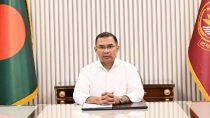
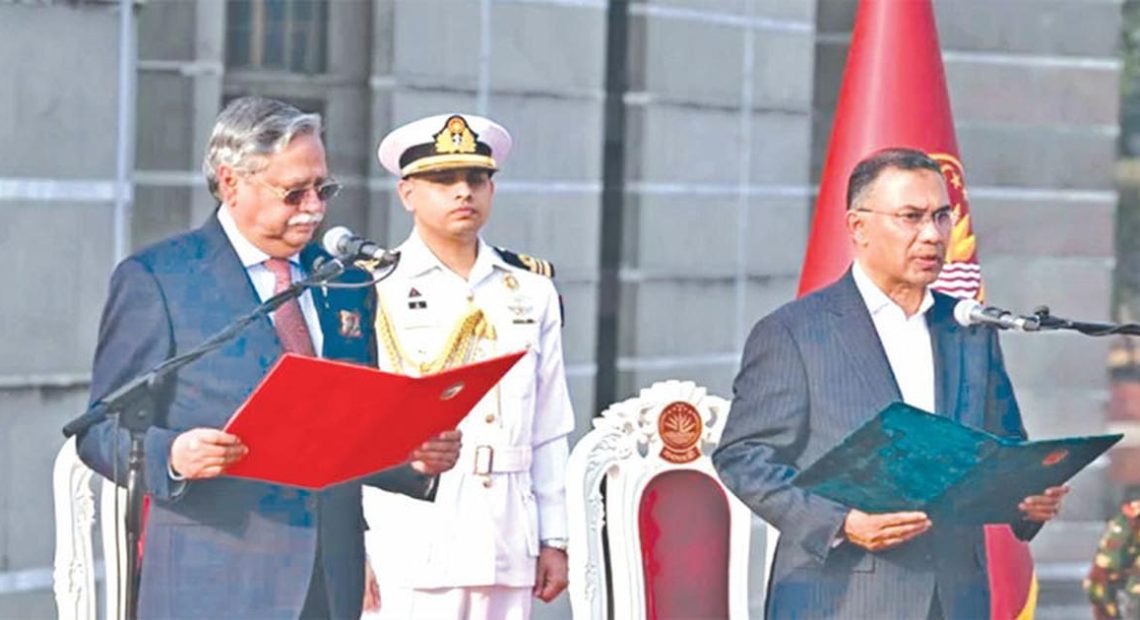
In the February 12, 2026 election, the BNP won a sweeping majority, and Tarique Rahman took oath as Prime Minister on February 17. The strong electoral mandate raised expectations that state institutions would become more neutral, administration more merit-based, justice more independent, markets more accessible and public services more effective.
The first six months show some progress, but several major questions remain.
1. Authority and Institutional Governance
Returning to power after a long period in opposition is a major achievement for the BNP. Its 180-day action plan prioritised law and order, commodity prices, electricity and fuel, corruption and administrative efficiency.
The main question, however, is whether the culture of power has changed. The Prime Minister has spoken in Parliament about dialogue and cooperation with the opposition, which is significant given the government’s large majority.
The real test will be administrative neutrality, judicial independence, political space for the opposition and the autonomy of state institutions. The BNP has established political authority, but whether that authority becomes accountable and institutional remains uncertain.
2. Has the BNP Itself Changed?
The BNP came to power promising to fight corruption, reform the state, improve administration, expand social protection and ensure political tolerance. But Bangladesh’s political history shows that promises alone are not enough.
There is a risk that political patronage, business interests, local influence and administrative pressure could return with the change of government. This is a structural problem of Bangladesh’s party politics, but the BNP faces greater responsibility because it promised political change.
Tarique Rahman has acknowledged allegations of extortion and land grabbing against BNP leaders and activists and spoken of organisational action. His major challenge is to retain the party’s strength while establishing it as a new political force. There are some signs of change, but a fundamental transformation of the BNP’s political culture has not yet been demonstrated.
3. July Uprising and Constitutional Reform
A major responsibility of the government is to give institutional form to the aspirations of the July-August 2024 uprising.
The July National Charter proposed reforms including a bicameral parliament, limits on the Prime Minister’s tenure, greater presidential powers, judicial independence, a stronger role for the opposition and protection of fundamental rights.
The BNP now faces a choice: preserve the existing power structure with limited reforms or create stronger constitutional checks on executive power.
In April, Parliament repealed several interim-government ordinances related to judicial independence, the judicial secretariat and judicial appointments. The government said they required reconsideration, while critics raised concerns about judicial independence.
The key issue is therefore not only whether reforms are made, but whether they genuinely limit the concentration of executive power.
4. New Opposition Politics
With the Awami League absent, the Jamaat-e-Islami led 11-party alliance has emerged as the main opposition force, winning 77 seats.
This marks a significant change from Bangladesh’s traditional Awami League-BNP rivalry. The BNP now has a dominant position, while the opposition is centred around Jamaat and includes elements of newer political forces.
The BNP’s challenge is to maintain healthy political competition. If it follows a winner-takes-all approach, the political possibilities created after the July uprising could narrow.
5. Governance and Political Influence
A major demand of the post-uprising period was to end the politicisation of the administration, police, judiciary and local government.
The government has prioritised good governance, anti-corruption measures, administrative reform and law and order. But the real test is the behaviour of BNP leaders and activists.
If extortion, land grabbing, political influence or pressure on officials increase at the local level, people may see the new government as another version of the old system.
The key question is whether Tarique Rahman can place state institutions above party interests.
6. Justice: Accountability or Political Revenge?
Ensuring accountability for the July-August killings, state repression, enforced disappearances, corruption and abuse of power is essential. But justice must not become political revenge.
Justice requires evidence, impartiality, the rights of the accused and equal application of the law.
The government has an opportunity to establish a new political culture by ensuring accountability while applying the same legal standards to political opponents. The success of the justice process will depend on its independence, transparency and freedom from political influence.
7. Commodity Prices and Inflation
The market remains one of the biggest concerns for ordinary people. According to the latest confirmed BBS data, national inflation fell to 9.16 percent in June 2026 from 9.42 percent in May. Food inflation stood at 8.60 percent and non-food inflation at 9.61 percent.
The government launched the Family Card programme in March to provide social assistance and support for food security, health and education.
The decline in inflation is positive, but purchasing-power pressures remain. Long-term price stability will require improvements in supply, transportation, imports, competition and the role of intermediaries.
8. Electricity and Energy Crisis
The energy crisis remains a major test of government capacity. In March 2026, the crisis became severe enough for the government to consider energy-saving measures and partial online education.
In July, a fire at an LNG terminal disrupted around 450 million cubic feet of gas supply per day. Although part of the terminal resumed operations in early August, supply did not fully normalise.
The government inherited energy-sector weaknesses, but voters now expect solutions. Load shedding affects education, businesses, agriculture, online work and household life. The government needs to ensure reliable electricity in the short term and reduce long-term dependence on imported energy.
9. Employment and Youth
Young people were a major force behind post-July change. Their expectations include merit-based opportunities and employment after education. The government has prioritised investment, industrial production and restoring economic confidence. But prolonged inflation has placed pressure on real incomes, particularly among the urban middle class and informal-sector workers.
The BNP’s long-term political success will partly depend on whether it can create opportunities based on merit, entrepreneurship and social mobility instead of political patronage.
10. Education, Healthcare and Citizen Services
Ultimately, political change will be judged by citizens’ daily experiences.
People encounter the state through hospitals, schools, government offices, land services, roads, security, water, gas and electricity. If reforms remain limited to the constitution and central institutions while public services remain unchanged, people may see them as an elite political project. But improved healthcare, education, local government and administrative services would make political change meaningful to ordinary citizens.
Six Months of Change, But Not Yet Transformation
The first six months show some important initiatives, including a strong electoral mandate, efforts to restore political stability, the Family Card programme and promises of institutional reform.
However, major questions remain. Will the July uprising’s mandate lead to meaningful constitutional reform? Will state institutions remain free from partisan influence? Will justice remain independent? Can the BNP break from patronage-based politics? Will the opposition receive sufficient political space? And will ordinary people experience improvements in prices, electricity, employment, education and healthcare? The first six months therefore show signs of change, but not yet proof of transformation.
The BNP government has moved beyond the task of changing the government and is now facing the greater challenge of changing the state. Tarique Rahman’s central test will be whether he can place the state above his party, institutions above political majority and citizens’ real experiences above political promises.
The writer : Poet, researcher and Islamic thinker.