Saudi Arabia Executes Two Bangladeshi Expatriates
The Issue Must Be Viewed Through National Interests and Realities, Not Emotions
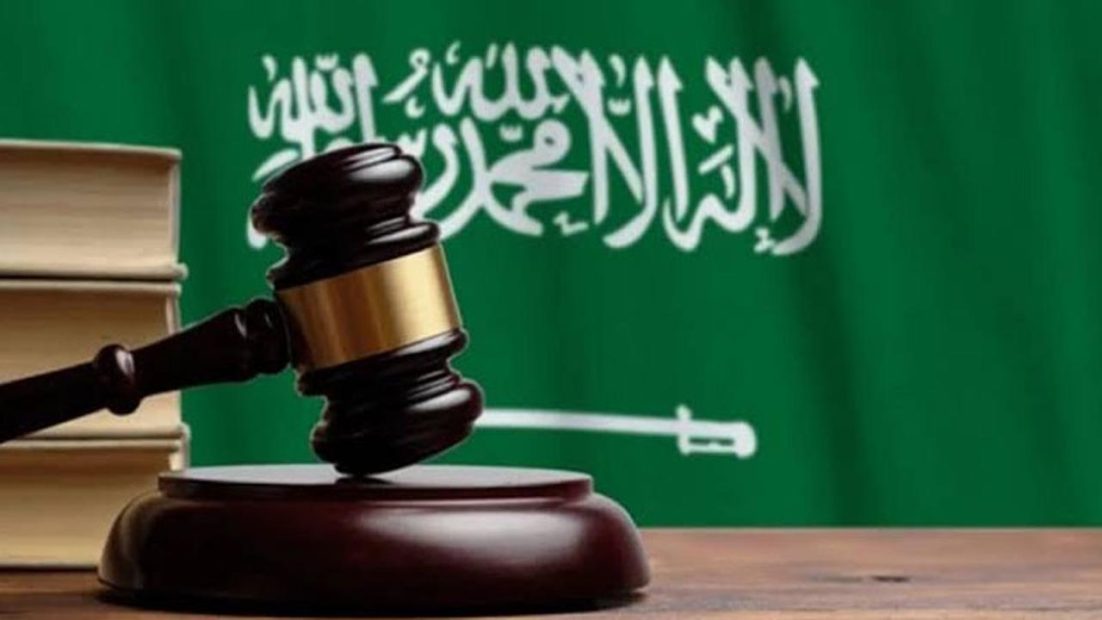
Nazrul and Sweety Akter worked as cleaners at the Grand Mosque in Makkah, Saudi Arabia. There is no reason to believe that these two ordinary migrant workers posed even the slightest threat to the Saudi royal family, government or local citizens. Nor is there any basis for claiming that the Saudi authorities or courts sentenced them to death out of personal resentment. Information from various media outlets and the families of the convicted individuals clearly indicates that the court handed down the death sentences after a thorough legal process lasting three and a half years over allegations of a serious crime committed within the precincts of the Grand Mosque in Makkah. The sentences were carried out recently.
According to the Saudi Interior Ministry, security forces arrested them after the crime was committed. Judicial proceedings were conducted based on a charge sheet prepared following a proper investigation. After the crime was proven beyond reasonable doubt, the sentences were carried out in the Makkah region under the Islamic legal principle of ta’zir (discretionary punishment imposed at a judge’s discretion). Considering the sanctity of the location and the gravity of the crime, several others involved in recording the incident and storing the footage on their mobile phones were also sentenced to varying terms of imprisonment.
The Saudi government has not publicly disclosed the details of the incident. This appears to reflect considerable prudence and sensitivity. Had the full details of such a heinous crime associated with the Grand Mosque in Makkah been made public, it would not only have damaged Bangladesh’s image worldwide but also put the dignity and livelihoods of nearly 3.5 million Bangladeshi expatriates living in Saudi Arabia at risk. Moreover, keeping the details undisclosed has spared the innocent families of the convicted individuals from public humiliation and intense social hostility. Widespread discussion of such an incident could also risk tempting others into similar acts under satanic influence.
Many people on social media are questioning whether proper legal procedures were followed in the trial. However, statements from the convicted individuals’ parents make it clear that they had known about their children’s arrests since mid-2023. Following the arrests, the families were allowed to speak to them over the phone at regular intervals. They even spoke to their relatives a few days before the executions. These facts prove that the Saudi authorities completed the entire process in accordance with their domestic Shariah and civil laws.
If the authorities’ handling of the matter needs to be reviewed, the roles of the Bangladesh Embassy, the Ministry of Foreign Affairs and the Ministry of Expatriates’ Welfare and Overseas Employment could be discussed. However, there can be no justification for vilifying or spreading hatred against the Saudi royal family, government or people based on vague assumptions.
Ignoring the realities and exploiting this sensitive incident as a pretext, domestic and foreign Islamophobic groups, along with several media outlets, including BBC Bangla, Prothom Alo, The Daily Star, Samakal and Kaler Kantho, appear to have launched one-sided and provocative campaigns. Influenced by such provocation, many people in our society are spreading slanderous and brazen allegations against Saudi Arabia without understanding the facts, examining the incident in depth or considering the consequences. This is deeply concerning. If the Saudi government, angered by such unwarranted provocation, releases the original case documents, Bangladesh could face embarrassment among Muslims worldwide. The two families, who bear no responsibility for the crime, would suffer social stigma, while any adverse impact on expatriate workers would leave the country’s 180 million people paying the price.
We must remember that Saudi Arabia is not only Bangladesh’s largest source of foreign exchange earnings but also a true friend and one of the country’s major development partners. The Saudi government has funded the construction of attractive model mosques in every upazila of Bangladesh. Whenever a natural disaster strikes, Saudi relief aircraft are among the first to arrive in Bangladesh. The world-renowned energy company Saudi Aramco has reportedly proposed a major investment in Bangladesh and expressed interest in constructing a large-scale oil refinery in Chattogram.
In the complex calculations of global politics, so-called friend India reaps one-sided benefits from Bangladesh while seeking to establish a sphere of political influence. Meanwhile, the United States and the European Union seek to impose various political, military and cultural conditions under the pretext of purchasing garments. Saudi Arabia is the exception, continuing to support Bangladesh without demanding anything in return.
Our overseas labour markets have already contracted in countries including Malaysia, Vietnam, Indonesia, the United Arab Emirates, Kuwait, Qatar and Bahrain, while some have closed altogether. Amid the current severe economic crisis, if Saudi Arabia, our largest overseas labour market and a major source of remittances, becomes displeased and takes punitive measures for any reason, Bangladesh’s economy will not have the capacity to withstand the resulting crisis.
Therefore, effective initiatives by the country’s Islamic scholars, conscientious politicians, responsible members of the student and youth communities, and the government are now urgently needed to raise public awareness, expose the alleged malicious propaganda of Islamophobic groups, and rein in irresponsible critics.
The writer is executive editor of the monthly Mueenul Islam and a teacher at Darul Ulum Hathazari Madrasa, Chattogram.