Government to Import Additional 695,000 Tonnes of Fuel
The Cabinet Committee on Government Purchase has approved 13 procurement proposals, including fuel oil, fertiliser and lentils. The proposals were approved at a meeting of the Cabinet Committee on Government Purchase held at the Secretariat on Wednesday, chaired by Finance Minister Amir Khosru Mahmud Chowdhury.
Of the approved proposals, six were from the Ministry of Agriculture, one from the Ministry of Shipping, one from the Ministry of Water Resources, one from the Ministry of Local Government, one from the Ministry of Industries, one from the Ministry of Commerce and two from the Energy and Mineral Resources Division.
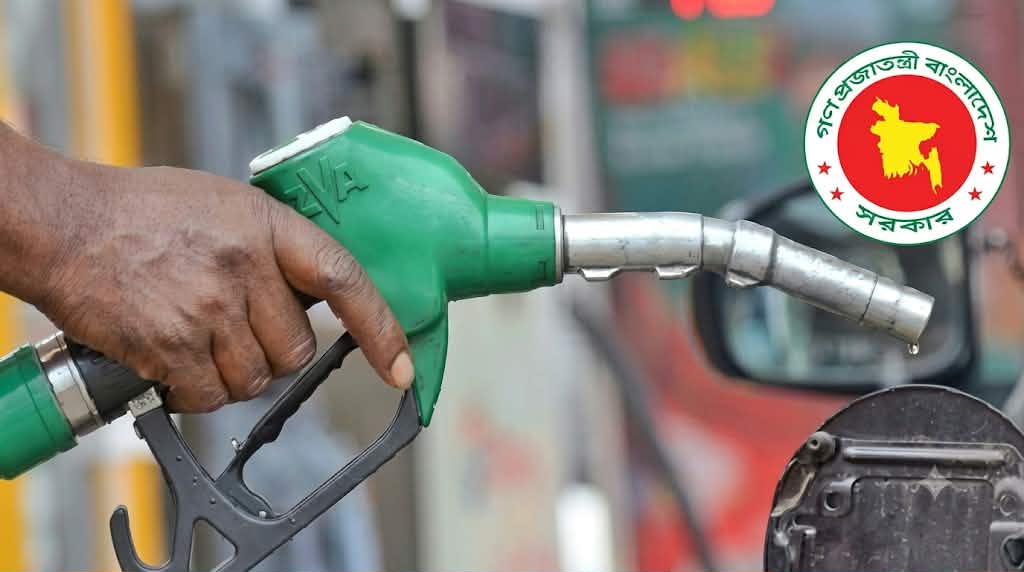
The meeting approved the import of refined fuel oil from state-owned companies of different countries during September-December at a cost of Tk 12,537 crore 49 lakh 70 thousand. It is learnt that the government has approved a proposal to relax the condition of importing fuel oil on a 50:50 basis through the government-to-government (G2G) system and international tenders during September-December 2026.
At the same time, procurement proposals were approved for importing refined fuel oil from state-owned companies of different countries under G2G agreements, based on the negotiated premium, quantity and current reference price. The total contract value of the proposal is Tk 12,537 crore 49 lakh 70 thousand. The recommended bidders are Unipec of China, BSP of Indonesia and PetroChina of China. The Energy and Mineral Resources Division placed the proposal.
Under the decision, the government has approved in principle the import of an additional 695,000 metric tonnes of fuel oil beyond the quantity already approved under the G2G process for September-December 2026. The additional quantity of gas oil and jet fuel is equivalent to 10 percent of the approved quota.
Meanwhile, the Cabinet Committee on Government Purchase approved several proposals to import large quantities of fertiliser from different countries through both government and private channels.
These include 35,000 metric tonnes of muriate of potash (MOP) from Russia, 40,000 metric tonnes of diammonium phosphate (DAP) from Morocco, 500,000 metric tonnes of DAP, 220,000 metric tonnes of MOP and 200,000 metric tonnes of triple super phosphate (TSP) through private importers from different countries.
The total cost of purchasing these fertilisers will be Tk 9,800 crore. The government has also decided to purchase 10,000 metric tonnes of lentils for sale at subsidised prices among low-income families holding Trading Corporation of Bangladesh (TCB) cards. The purchase will cost around Tk 77 crore, or Tk 76 crore 79 lakh.
According to a proposal from the Ministry of Commerce, the lentils will be purchased locally through the national open tender system. TCB will implement the procurement. The lentils will be purchased from the lowest bidder, Joytun Auto Rice and Dal Mills Ltd, at Tk 76.79 per kilogram, including transportation costs up to TCB warehouses. A total of 10,000 metric tonnes will be purchased at a total cost of Tk 76 crore 79 lakh.
The proposal said TCB has set a target of purchasing 220,000 metric tonnes of lentils in the 2026-27 fiscal year. Of this, 17,528 metric tonnes have already been purchased. At the meeting, the government also approved the import of 40,000 metric tonnes (+10 percent) of bulk granular urea fertiliser from Saudi Arabia’s SABIC Agri-Nutrients Company. The cost will be Tk 193 crore 55 lakh 83 thousand 720.
The fertiliser will be imported through Bangladesh Chemical Industries Corporation (BCIC) under an initiative of the Ministry of Industries. The cost of the import will be paid from the budget allocated for agricultural subsidies. It is learnt that the government has been importing urea fertiliser from Saudi Arabia’s SABIC under G2G agreements since 2007.
For the 2026-27 fiscal year, an agreement has been signed with SABIC Agri-Nutrients Company to import a total of 820,000 metric tonnes of urea fertiliser. Of this, 320,000 metric tonnes are covered by the regular contract, while arrangements have been made to import an additional 500,000 metric tonnes in view of emergency needs.
The committee also approved a proposal to increase the cost of a construction package under the Dhaka Water Supply Network Improvement Project by Tk 61 crore 69 lakh 95 thousand 573.
The proposal for variation in the civil works of the project, titled “Rehabilitation of Distribution Network for NRW Reduction (Including Procurement of Plant and Construction of DTW Pump Station with O&M Support)”, was placed by the Local Government Division. Dhaka WASA is implementing the project.
According to the proposal, following approval by the Cabinet Committee on Government Purchase on November 8, 2018, a contract worth Tk 220 crore 49 lakh 52 thousand 430 was signed with Chinese company China First Metallurgical Group Company Ltd.
During implementation, the scope of work under the project increased, creating a need for additional expenditure. As a result, the revised contract value, including the variation of Tk 61 crore 69 lakh 95 thousand 573, has increased to Tk 282 crore 19 lakh 48 thousand 4.
This means the revised contract value is around 27.98 percent higher than the original contract value. The committee also approved Tk 180 crore for the protection of 1,625 metres of the Jamuna River bank in Kalihati upazila of Tangail.
According to a proposal from the Ministry of Water Resources, the work will be carried out under Package WD-3 of the Jamuna River Sustainable Management Project-1: Riverbank Protection and River Management (Component-1), implemented by the Bangladesh Water Development Board.
The project will be financed by government funds as well as a World Bank loan. Under the project, 1,625 metres of riverbank in Kalihati upazila will be protected by constructing permeable groynes and top-block permeable groynes. The work will include the construction of six three-row pile groynes.
Meanwhile, the meeting approved an agreement to select private partners to restart Magura Textile Mill and Darowani Textile Mill in Nilphamari, both under the control of Bangladesh Textile Mills Corporation (BTMC), through the public-private partnership (PPP) system. This is part of an initiative to restart 16 BTMC mills under the PPP model.
Magura Textile Mill was established on 16.06 acres of land and operated from 1985 to 1999. Under the 30-year project, the private partner, Charka Textile Ltd, will make the entire investment. Under the agreement, the company will pay Tk 4 crore 75 lakh as a one-time signing money, Tk 1 crore 30 lakh annually as a contract fee after a three-year grace period, Tk 50 lakh as a development fee and provide a bank guarantee of Tk 2 crore 50 lakh to BTMC.
Darowani Textile Mill in Nilphamari was established on 37.86 acres of land and operated from 1980 to 1997. Classical Handmade Products BD Ltd has been selected as the preferred bidder to restart the mill. The 30-year project will involve an investment of around Tk 200 crore and create employment for 3,000 people.
In return, the company will pay Tk 9 crore 50 lakh as a one-time signing money, Tk 12 lakh 91 thousand 667 per month as a contract fee from the third year, Tk 75 lakh as a development fee and provide a bank guarantee of Tk 2 crore 50 lakh. The government will make no financial investment in these projects. It will only ensure the use of the land.