Intelligence fails despite prior warning!
Sakhawat Hossain
Police arrested citizens of China and various other countries in Chattogram and Cox’s Bazar based on intelligence information. There were no allegations against these foreign nationals of deteriorating the country’s law and order or posing a threat to the state. Many of those detained had been living in the country after their visas expired, and police and intelligence found nothing threatening to the state among the various electronic devices recovered from them.
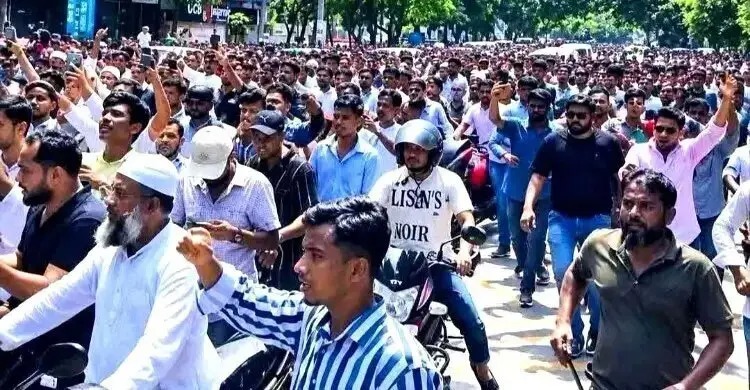
Yet fugitive Awami League, Jubo League and banned Chhatra League leaders and activists, desperate to threaten the state and worsen law and order, are openly holding flash processions in the most sensitive areas of the country. They have set off crude bombs or explosives to create panic before fleeing, yet the country’s intelligence agencies had no advance information on this. Due to intelligence failure, associates of the fugitive fascists have been holding one flash procession after another in Gulshan in the capital and various other areas of the country. While these processions have created panic among ordinary people and renewed concern within law enforcement, responsible officials of the country’s intelligence agencies have remained inactive.
Field level police have failed to take preventive measures before processions begin, due to not receiving accurate advance intelligence about specific locations and times. A lack of coordination between senior police officials and intelligence agencies has become evident. Discussion and criticism are ongoing everywhere, including on social media, over the simultaneous flash processions by the banned Awami League and its affiliated organizations in Dhaka, Gazipur and Chattogram, and the resulting police and intelligence failure. Criticism is also coming from within the government itself.
Speaking with several police officials on Sunday, it was learned that there was no advance information that a procession would take place. Such information is usually provided by the NSI and SB. Additionally, the CID, DMP’s own intelligence unit and police station civil units also gather advance intelligence, while the DGFI collects various types of information as well. It is mainly based on advance information that RAB and police take preemptive measures. However, there was no advance information about such a large Awami League procession in Gulshan, so police could not take immediate action. Afterward, reviewing video footage of the procession, police arrested 46 leaders and activists from Gulshan and surrounding areas, all of whom have since been sent to jail through the courts.
Meanwhile, speaking with several intelligence agency officials, it was learned that advance information is usually sent in writing or by message to agency headquarters. Department heads then inform the chiefs of law enforcement agencies, who take preemptive measures accordingly. In the Gulshan incident, no such advance information came from the field. A detailed analysis is underway as to why this happened, and several meetings have already been held at high levels of government. Various issues have come up, but no clear cause of the intelligence failure has been found. Field level intelligence officers have stated that they received no advance information about the procession. However, one thing has clearly emerged: the plan was made outside Gulshan. Coming from outside, they gathered in Gulshan and suddenly staged the procession before fleeing, which is why intelligence agencies had no advance information. Discussion continues in political circles over whether the incident was mere intelligence failure or negligence by intelligence agencies. Detailed discussion is also ongoing at the top level of police over whether field level intelligence officers deliberately failed to gather such information, or gathered it but failed to inform senior officials.
Commenting that the Awami League is peeking back into view, BNP’s Acting Secretary General Mr. Ruhul Kabir Rizvi has questioned the role of intelligence agencies. He asked where the intelligence agencies were. He said the banned political party is suddenly trying to hold open processions, and an answer is needed as to whether intelligence agencies knew how so many people gathered. He also remarked that it needs to be examined what the police administration was doing.
Criticizing the Awami League’s political activities, Mr. Rizvi said that although the Awami League is a political party, its activities need to be tried. He alleged that during the movement, primary, secondary and university students, rickshaw pullers, workers and ordinary people were killed. He said that if the Awami League wants to return with its previous vengeful character, pro democracy people have reason to be concerned about what the country’s fate would be.
Sources said that since Awami League leaders and activists brought out processions in the capital and various other places in the country, intense administrative pressure has built up on police from the top level of government. A strict explanation has been demanded as to how leaders and activists of the banned organization managed to hold simultaneous processions despite adequate law enforcement presence at the field level. However, internal sources claim the main reason behind this overall situation is a severe shortage of intelligence information. Extensive discussion and criticism are currently ongoing within the police force over this matter. Under pressure from senior officials, field level officers are clearly highlighting the shortage of intelligence information. According to them, if specific and timely information had been available in advance, additional police deployment and increased surveillance in the relevant areas could have foiled the procession before it began.
Intelligence reports have revealed that after its fall from power, the party has adopted a new strategy of keeping activists engaged through flash processions and contact with leaders staying abroad. With December approaching, police have been instructed to remain on high alert and increase intelligence coordination to prevent any major disorder or subversive activity being planned. On condition of anonymity, a senior police official said that field level police had already been given strict warnings and necessary instructions in advance to prevent flash processions by the banned Awami League. However, in many cases preventive measures could not be taken in advance due to not receiving specific intelligence information in time regarding where, when and who was organizing. After processions began, efforts were made to immediately reach the scene and bring the situation under control.
Another senior police official said that holding such flash programs simultaneously in different areas of the country is undoubtedly a matter of great concern. It is not possible for police to know advance movements everywhere through their own sources alone, so receiving timely field level information from intelligence agencies is extremely important. Internal police review of Friday’s incidents has already begun, and exactly where the information gap occurred is being examined.
According to law enforcement, there has been an increasing tendency over the past few months to gather in the capital as well as Chattogram and Gazipur, chant party slogans and make anti government remarks before quickly dispersing. In some places, police immediately chased and dispersed the procession participants, while in others, flash operations ensured arrests. AIG Mr. A. H. M. Shahadat Hossain of the Police Headquarters’ Media and Public Relations Wing told Inqilab that intelligence gathering and surveillance regarding the activities of any banned party remains ongoing. If any intelligence gap is found in any incident, it will be reviewed and necessary measures taken, and surveillance has been further strengthened to prevent such incidents in the future.