Pakistan Offers 10 Free Annual Liver Transplants to Bangladeshis
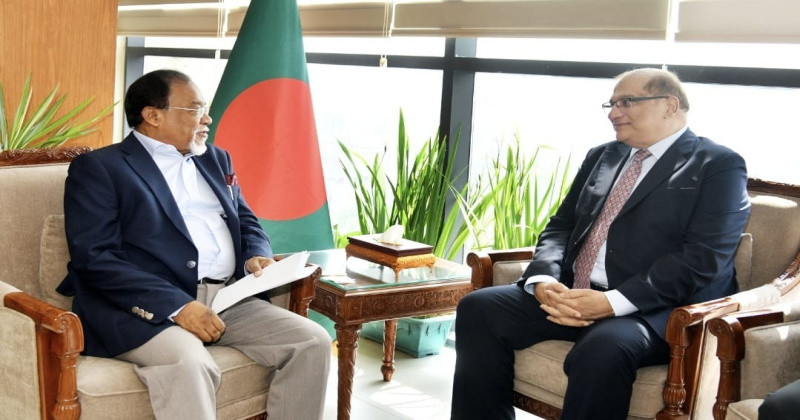
Pakistan has offered free liver transplant surgeries for 10 Bangladeshi patients annually at the Pakistan Kidney and Liver Institute and Research Center. High Commissioner Imran Haidar presented the proposal during a courtesy call on Wednesday with Ismail Zabiullah, Public Administration Advisor to the Prime Minister. Beyond surgical care, Pakistan proposed specialized training for Bangladeshi doctors and nurses, along with medical service exchanges to expand bilateral healthcare collaboration and healthcare tourism.
Trade expansion featured prominently, with the High Commissioner highlighting Pakistan’s annual duty-free import quota of 10,000 metric tons for Bangladeshi tea. Both sides discussed measures to boost tea exports and explored market opportunities for Bangladeshi pineapples and shrimp. Discussions also covered industrial cooperation, specifically the establishment of joint-venture manufacturing plants between Bangladeshi entrepreneurs and sports equipment manufacturers from Sialkot to produce tennis balls and athletic gear through technology transfer.
To strengthen public sector capacity, Pakistan expressed eagerness to sign Memorandums of Understanding between key training institutes, including BPATC and NSPP, and BCSAA and CSA. Mr. Haidar noted, ‘Twelve Bangladeshi civil servants have completed training in Pakistan, while training for another 35 officers is currently in progress.’ Advisor Ismail Zabiullah recalled the historical Inter-Wing Scholarship Program, while both officials expressed optimism that public administration initiatives would foster mutual understanding and economic cooperation.
Bilateral discussions extended to pharmaceuticals, tourism, the jute industry, education, and aviation. The High Commissioner remarked, ‘The resumption of direct flights between Dhaka and Karachi after 14 years would increase people-to-people contact and play a significant role in strengthening bilateral ties.’ Both sides emphasized leveraging these sector-specific synergies to promote trade, reduce the bilateral trade deficit, and enhance diplomatic engagement across economic and cultural spheres.
The meeting concluded with mutual optimism regarding future bilateral engagement, trade growth, and investment opportunities. Both representatives reaffirmed their commitment to taking actionable steps across healthcare, trade, industrial joint ventures, and civil service training. By capitalizing on untapped potential and fostering stronger institutional linkages, both nations aim to inject renewed momentum into their overall bilateral relationship and build long-term economic and diplomatic partnerships.