Three Judges Run Six Courts Over 19,000 Cases Remain Pending
Khulna Bureau
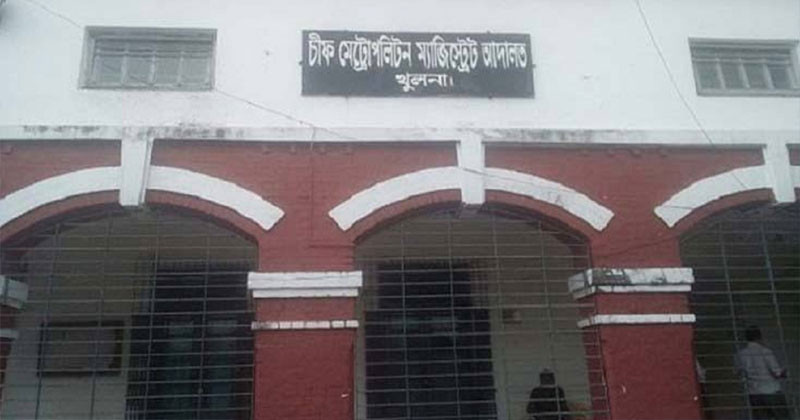
The judicial activities of the Khulna Metropolitan Magistrate Courts have virtually come to a standstill due to a shortage of judges. Although there are six Metropolitan Magistrate Courts in the metropolitan area, three of them have been without judges for more than a month. As a result, only three judges are having to handle nearly 19,000 cases across all six courts. The judges are struggling to manage the excessive caseload, while people seeking justice are facing long delays in obtaining verdicts.
According to sources at the Khulna Chief Metropolitan Magistrate (CMM) Court, 19,046 cases were pending before the metropolitan magistrate courts as of August 31. New cases filed every day at different police stations in the city are also being added to the caseload. As a result, the pressure is increasing gradually. Meanwhile, 2,562 important cases have already been transferred from the Metropolitan Magistrate Courts to the Metropolitan Sessions Judge’s Court and other courts for trial. Of these cases, 426 have been disposed of.
Tapan Kumar Saha, administrative officer of the CMM Court, said there are six courts to conduct judicial proceedings in the Khulna metropolitan area. He said three posts, including that of Additional Chief Metropolitan Magistrate and two other Metropolitan Magistrates, have remained vacant for more than a month due to transfers. As a result, nearly 19,000 cases from six courts are being handled by only three judges. Managing such a large number of cases with three judges is extremely difficult, he said.
Court officials said the shortage of judges has increased the number of hearing dates for cases. People seeking justice have to wait for a long time for hearings or witness examinations. Delays in recording witness testimony, in particular, lead to delays in the disposal of cases. As a result, both plaintiffs and defendants have to appear in court repeatedly.
A senior member of the Khulna District Bar Association, Advocate A. Malek, said both plaintiffs and defendants suffer when there is a shortage of judges. Plaintiffs are unable to present evidence and testimony on time. On the other hand, defendants have to keep visiting court for years. This causes them to lose both time and money. He urged the relevant authorities to fill the vacant judicial posts as soon as possible.
Advocate Mominul Islam, coordinator of the Human Rights Implementation Organisation in Khulna, said prolonged delays in cases are contrary to justice. A case often remains pending for a long time even at the investigation stage. It then takes more time for the case to reach trial. After charges are framed, witnesses also become reluctant to appear in court.
Many try to avoid attending hearings.
If an accused person is influential, there are also incidents where plaintiffs and witnesses are pressured or prevented from appearing in court. He said prolonged delays eventually give witnesses an opportunity to present statements in their own way. He further said the number of judges in Khulna’s court area is low compared with the number of cases. At different times, judges are transferred elsewhere soon after joining.
Frequent transfers of judges and vacant posts are creating a growing backlog of cases, he said. He added that appointing judges alone would not be enough; the required number of courtrooms must also be ensured. Advocate Mominul Islam said there are also fewer courtrooms than the number of judges. In some cases, such as the Children’s Violence Tribunal, two judges have to sit in the same courtroom.
The number of courtrooms in the court building is lower than required, which is disrupting judicial proceedings. Unless the number of courtrooms is increased at the state level, even important and high-profile cases could face prolonged delays, he warned.
Lawyers and people seeking justice said the vacant judicial posts must be filled quickly, new courtrooms must be created, and frequent transfers of judges must be stopped.
Otherwise, the backlog of old cases will continue to grow alongside new cases. This could undermine the constitutional right of people seeking justice to receive timely justice.